Hormuz shipping near-standstill as US-Iran war escalates
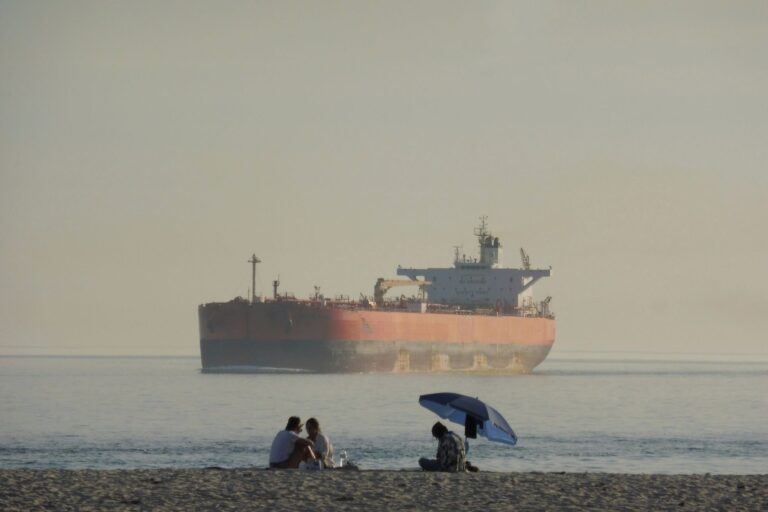
Shipping through the Strait of Hormuz ground to a near-halt on Thursday as renewed US-Iran hostilities sent roughly 200 vessels scrambling to hold position or reverse course, leaving an estimated 6,000 seafarers stranded in one of the world’s most critical maritime chokepoints.
Traffic collapses overnight
The slowdown began in the early hours after reports of fresh military exchanges between American and Iranian forces in the region. By dawn local time, tanker tracking data showed vessel speeds dropping sharply across the strait, with dozens of ships anchoring in holding patterns well outside the 21-mile-wide passage. It’s the most severe disruption the waterway has seen in years. Insurers immediately flagged the situation, with war-risk premiums on Gulf voyages reportedly spiking by as much as 300 percent within hours.
Around 20 percent of the world’s traded oil typically moves through Hormuz. That figure was effectively zero for much of Thursday.
Seafarers stranded, nations on alert
Gulf states including the UAE, Oman, and Kuwait placed their coast guards on heightened alert and urged commercial operators to avoid the strait until further notice. But for the crews already caught in the middle, there weren’t many good options. Sailors aboard waiting vessels described tense, uncertain hours with little information coming from either shore.
“We’re telling our members to shelter in place and maintain communication with their flag states,” said a spokesperson for a major international seafarers’ union. “These men and women didn’t sign up for a war zone.”
Still, some operators chose to push through. At least 11 vessels were confirmed transiting as of Thursday afternoon, though maritime safety agencies warned the corridor remained highly dangerous.
Energy markets reel
Oil markets reacted immediately. Brent crude futures jumped more than $9 per barrel in early trading before pulling back slightly, settling around $6 above Wednesday’s close. Analysts warned that a prolonged closure — even partial — could send prices significantly higher within days. Natural gas markets in Europe, still sensitive to supply disruptions, also moved sharply upward.
So the economic stakes extend well beyond the Gulf itself. Asian buyers, particularly in Japan, South Korea, and China, are among the most exposed, given their heavy dependence on Middle Eastern crude.
What comes next
Diplomatic channels, by most accounts, went quiet on Thursday. Neither Washington nor Tehran issued any formal ceasefire signals, and Pentagon briefings remained vague on operational details. European governments called for de-escalation, though it’s unclear what leverage they hold at this stage.
Shipping companies are now drawing up contingency routes around the Cape of Good Hope — a detour that adds roughly 15 days and significant cost to each voyage. Whether those plans become necessary depends almost entirely on how the next 48 to 72 hours unfold. And right now, nobody seems confident they know the answer to that.