5.2-magnitude earthquake strikes Liuzhou: 13 buildings down, 7,000 evacuated
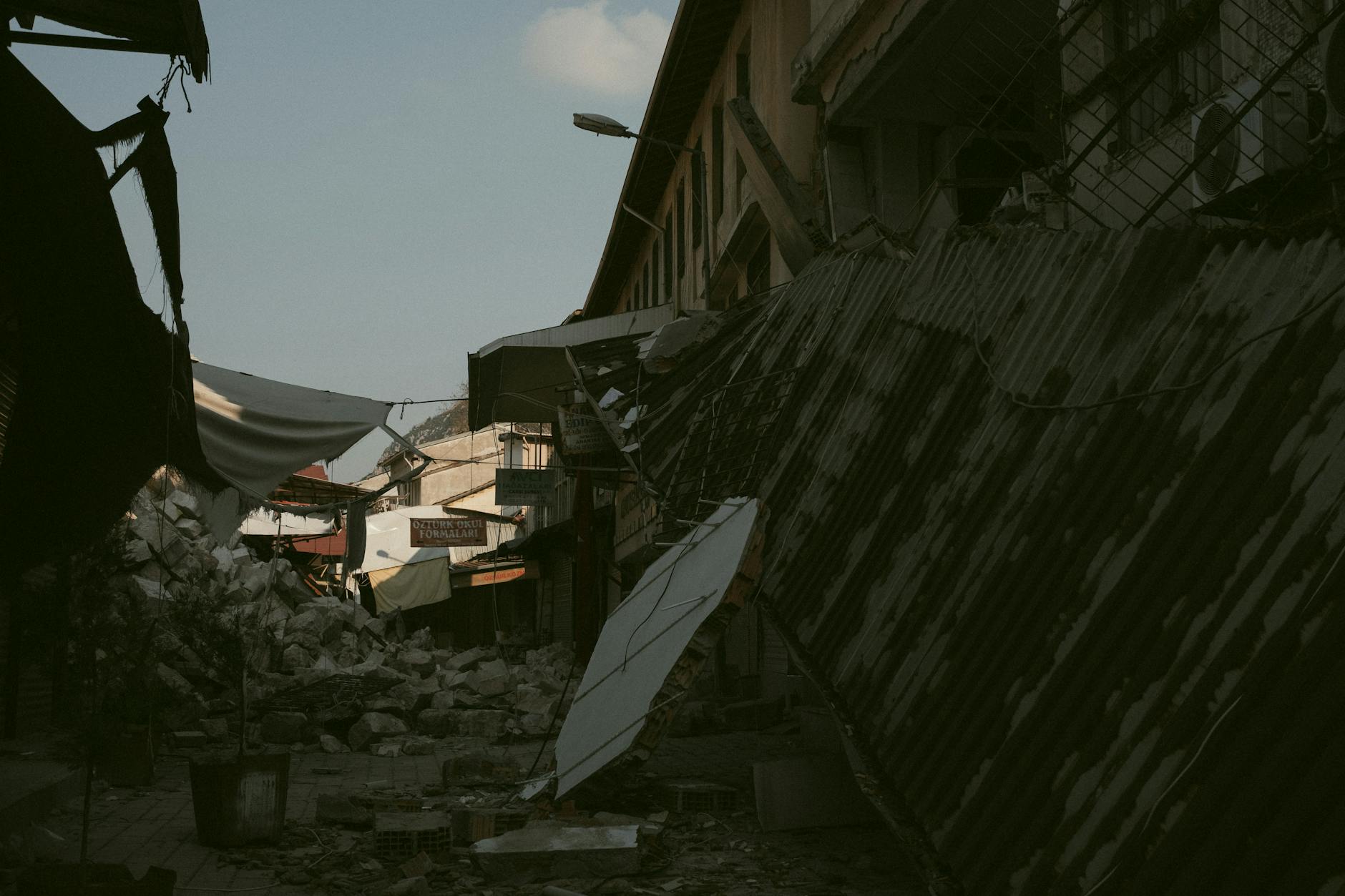
A magnitude 5.2 earthquake struck the Liunan District of Liuzhou, in China’s Guangxi Zhuang Autonomous Region, at 00:21 local time on Monday 18 May 2026 (16:21 UTC on 17 May), killing two people, injuring four, collapsing at least 13 buildings and forcing the evacuation of more than 7,000 residents. By Monday evening Beijing time, search and rescue operations continued, with one person reportedly still missing and authorities warning of transport disruptions across the southwest of the country.
The seismic record
The China Earthquake Networks Center recorded the quake at magnitude 5.2 at a depth of 8 km. The United States Geological Survey reported a magnitude 5.0 at 10 km depth, with epicentre 24 km northwest of Liuzhou (population approximately 1.44 million) and 40 km west of Luorong (population approximately 68,000). The European-Mediterranean Seismological Centre (EMSC) registered magnitude 5.1 at near-zero depth. The shallow focal depth of the event – between 0 and 10 km depending on source – amplified surface intensity at the epicentre, explaining the high ratio of building collapses to total magnitude.
The response
The State Council Earthquake Relief Headquarters Office and the Ministry of Emergency Management activated a national Level IV earthquake disaster emergency response within hours, deploying 51 fire-rescue vehicles and 315 fire-rescue personnel to the affected area. Operations focused on Taiyangcun Town, where damaged structures were systematically searched. Rail authorities inspected the integrity of infrastructure across the southwest, and several train services were suspended pending clearance. By late afternoon, state news agency Xinhua confirmed that power, water and gas supplies were operating normally, with a 91-year-old man among those rescued from collapsed buildings.
The regional vulnerability
The Guangxi Zhuang Autonomous Region experiences less frequent and severe seismic activity than neighbouring Yunnan and Sichuan provinces, but the region’s mountainous terrain and a high concentration of older masonry construction in district centres make it vulnerable to sudden tremors. The 18 May event sits within a broader Chinese seismic pattern that includes the 2008 Sichuan earthquake (magnitude 7.9, more than 87,000 dead) and the 1976 Tangshan event (magnitude 7.5, official figure 242,769 dead, contested estimates well above 600,000). By those standards, Monday’s event is statistically minor – but the building-collapse ratio at the epicentre rises concerns about local construction codes.
The economic angle
Liuzhou is an industrial city of approximately 1.44 million people, known for its automotive sector – including SAIC-GM-Wuling Automobile, manufacturer of the Wuling brand – and for its heavy machinery industry. A regional disaster response that disrupts production lines, even briefly, propagates through global supply chains. SAIC-Wuling exports to over 50 countries, and the Wuling Hongguang Mini EV is a global best-seller in the small-EV segment. Initial reports on Monday afternoon suggested that the main industrial facilities had escaped significant structural damage, but secondary effects on logistics and worker availability remained under assessment.
European technical co-operation
The European Commission’s Joint Research Centre, which operates the Global Disaster Alerts and Coordination System (GDACS), classified the Liuzhou event as “green-level” – significant but not requiring international assistance. The EU Civil Protection Mechanism was not activated. Several European universities with active geoscience partnerships in China – notably ETH Zurich, the German GFZ Helmholtz Centre Potsdam, and France’s Géoazur (University of Côte d’Azur) – are expected to receive seismic data for joint analysis with Chinese counterparts.
The diplomatic context
The earthquake comes at a delicate moment in EU-China relations. The bilateral has been operating under continuous pressure since the imposition of EU electric-vehicle tariffs in 2024 and the ongoing negotiation of the steel safeguard regime that goes to plenary endorsement in Strasbourg this week. Solidarity messages from European leaders – expected from President von der Leyen and Council President António Costa during the day – follow a long-established protocol that separates condolences from substantive disputes. Beijing, for its part, traditionally accepts European sympathy without using the occasion to suspend tensions on commercial or geopolitical files. The Liuzhou event will not change the trajectory of the EU-China relationship, but it provides a moment of diplomatic warmth that could matter at the margins of next week’s commercial calendar.