India’s youth demand accountability as education minister resigns
The resignation of India’s Education Minister has sent a jolt through the country’s political establishment, with opposition figures calling it an accountability moment that proves sustained youth pressure can crack even the most centralised of governments. For Anish Gawande, National Spokesperson for the Nationalist Congress Party, it’s a turning point — but not yet a transformation.
A concession, not a conversion
The minister’s departure came alongside two other government moves: the passage of tougher anti-cheating legislation carrying penalties of up to 10 years in prison, and the appointment of a seven-member reform task force to review examination oversight. To Gawande, these are real wins. But he’s careful not to overstate them.
“What we’re seeing is procedural,” he told journalist Delano D’Souza in a recent interview. “Higher penalties and reshuffling of officials don’t fix the deeper rot. The infrastructure isn’t there, the technology isn’t there, and frankly, the political will to genuinely consult young people isn’t there either.”
Still, he called the minister’s exit an “exhilarating moment” for India’s youth — a concrete signal that their voices carry weight.
From hashtags to streets
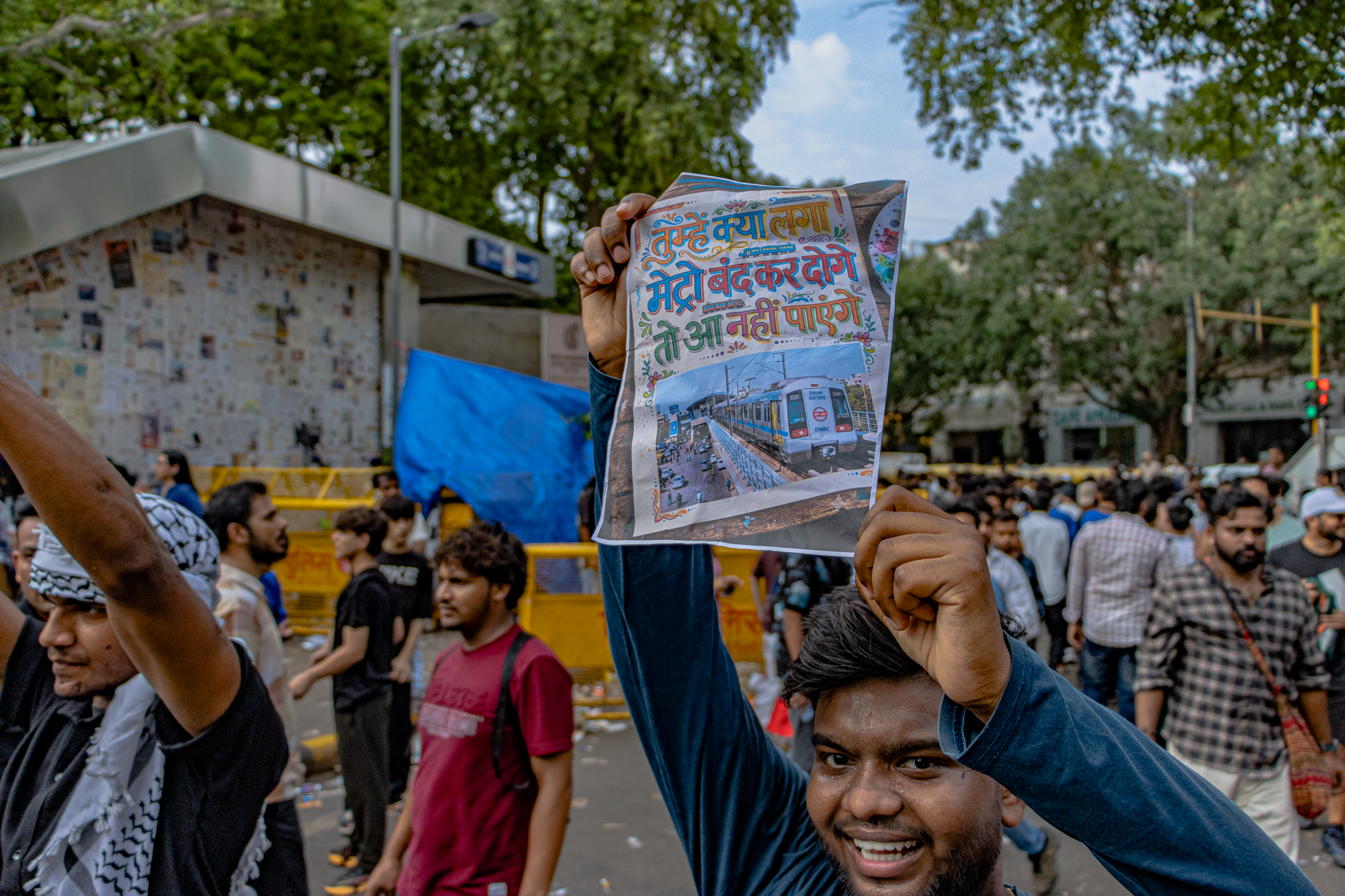
What makes this movement different, Gawande argues, isn’t just its scale. It’s its character. India’s under-35 population — which accounts for roughly 65 percent of the country’s 1.4 billion people — has historically channelled frustration into social media. That’s been changing. Protests over the NEET examination scandal drew tens of thousands of students to physical demonstrations in at least 12 states over six weeks this summer.
That shift from digital dissent to collective street action is, in his reading, a generational pivot.
And it’s one the ruling Bharatiya Janata Party can’t simply dismiss. The BJP’s political dominance has long relied on a combination of nationalist messaging and what critics describe as a politics of fear — the suggestion that dissent is inherently destabilising. Gawande says younger Indians are increasingly unmoved by that framing. “This generation didn’t grow up afraid,” he said. “They grew up online, comparing notes across borders. They know what accountability looks like elsewhere.”
Structural gaps remain
The anti-cheating law, signed last month, has been welcomed in principle by education advocates. But several policy researchers have pointed out that India’s examination infrastructure still runs on systems that are more than two decades old in many states. Biometric verification and digital audit trails — standard practice in countries like South Korea and Singapore — remain inconsistently implemented here.
A senior official from the Ministry of Education, speaking on background, acknowledged that “implementation will require significant state-level coordination” and declined to set a timeline for the task force’s first recommendations.
What comes next
Gawande is watching the task force closely. Its composition, its mandate and — critically — whether its findings will be made public will determine whether this moment produces lasting reform or simply absorbs political pressure without releasing it.
India’s next general examination cycle begins in March. That’s not much time. And for millions of students who’ve already lost trust in the system, procedural reassurances won’t be enough.