
Europe trade policy 2050: PIIE charts a fragmented future
Europe’s trade future looks nothing like its past. A sweeping new analysis from the Peterson Institute for International Economics lays out what European trade policy could look like by 2050 — and the picture is complicated, fractured, and urgent.
A continent at a crossroads
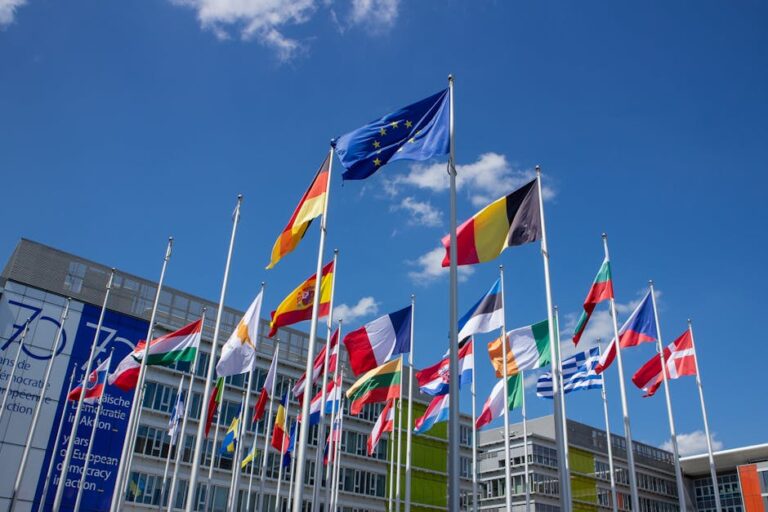
The PIIE report, part of its broader “Europe of the Future 2050” series, argues that the European Union faces a defining choice between deeper economic integration and a retreat into strategic protectionism. It’s not an abstract debate. Tariff tensions with China, friction with the United States over industrial subsidies, and internal disagreements among the EU’s 27 member states are already pulling policy in multiple directions.
By 2050, the EU could be managing trade relationships with over 60 bilateral or regional agreements simultaneously — a web that requires serious institutional muscle to hold together.
The China and U.S. problem
Two relationships dominate the conversation: China and America. The EU’s trade surplus with the United States hit roughly €155 billion in 2023, a number that didn’t go unnoticed in Washington. And the EU-China trade relationship, worth over €750 billion annually, is increasingly defined by distrust over subsidies, market access, and technology controls.
The PIIE analysis suggests that Europe can’t afford to simply mirror U.S. decoupling strategies from China. But it also can’t ignore the geopolitical pressure to do so. That tension won’t resolve itself neatly.
“Europe needs a trade doctrine that is genuinely its own — not a derivative of Washington’s or Beijing’s priorities,” said a senior European trade official familiar with the report’s findings.
The green economy reshapes everything
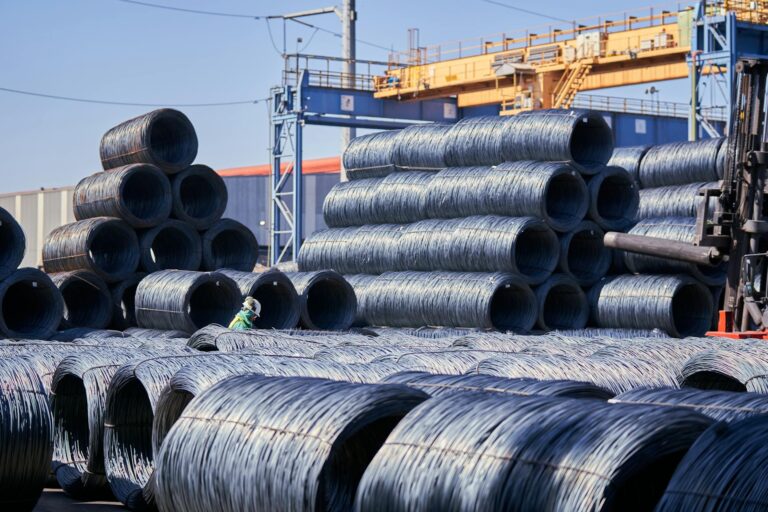
Climate policy and trade policy are now inseparable. The EU’s Carbon Border Adjustment Mechanism, which started phasing in during 2023, is already reshaping how trade partners think about European market access. By 2030, it’s expected to cover steel, cement, aluminum, fertilizers, and electricity — sectors that together account for hundreds of billions in annual cross-border flows.
The PIIE report flags a real risk: that green trade measures, however well-intentioned, could calcify into a new form of protectionism dressed up in environmental language. That’s a concern developing economies have raised loudly, and it won’t disappear.
What 2050 actually requires
The report stops short of prescribing a single path. But it’s clear on one thing: Europe needs institutional reform to even manage the complexity ahead. The European Commission’s trade directorate is already stretched thin. Scaling up for a world of fragmented global supply chains, carbon-adjusted trade flows, and digital commerce rules will demand resources and political will that aren’t obviously there yet.
Still, Europe has surprised skeptics before.
If the EU can align member states around a coherent, forward-looking trade strategy — one that balances openness with resilience — it could remain one of the world’s most consequential trading blocs well past 2050. The next decade will likely decide whether that’s still possible.