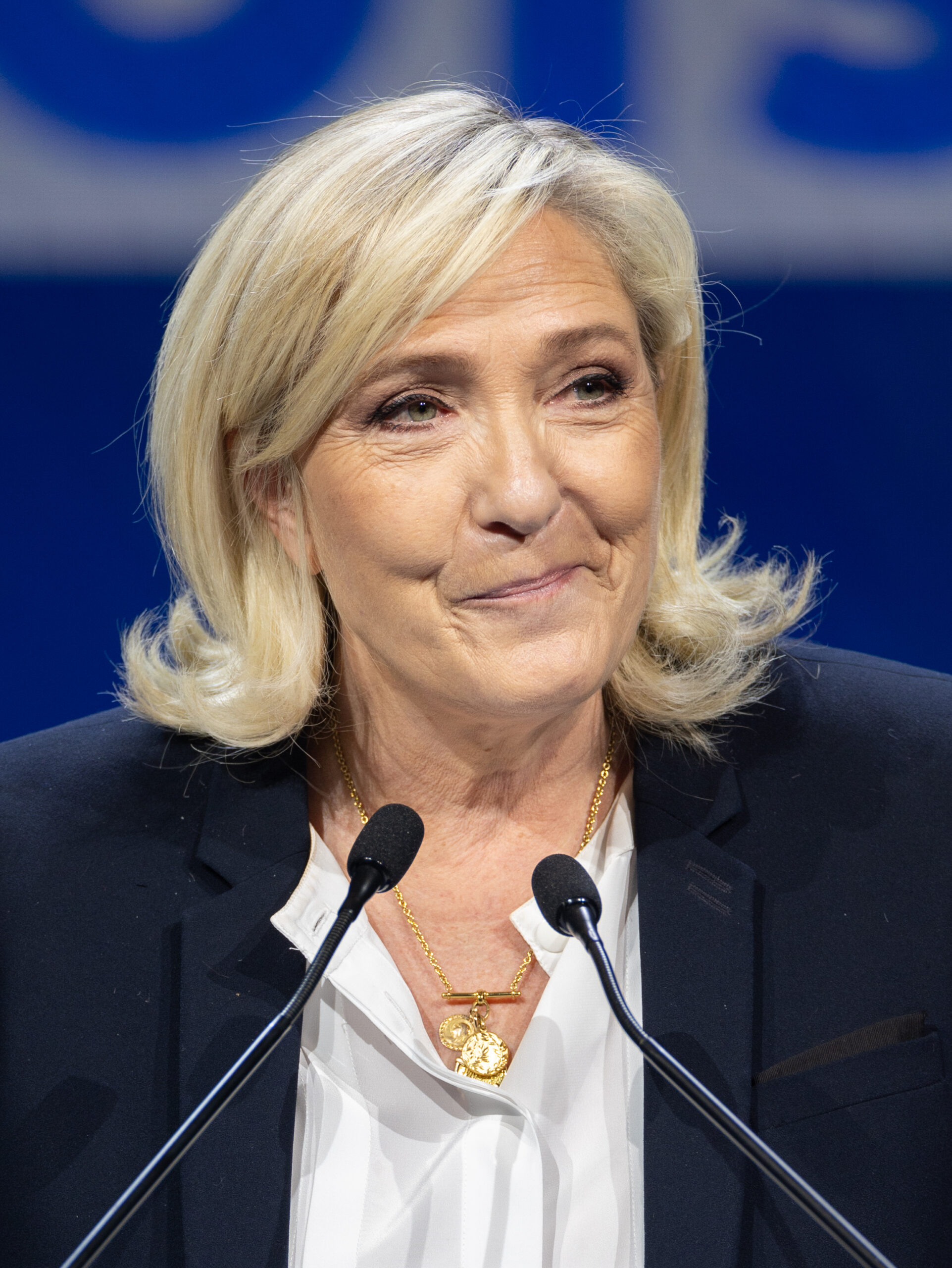
Marine Le Pen kicks off 2027 French presidential campaign in Hénin-Beaumont
Marine Le Pen launched her 2027 presidential campaign on Sunday with a rally in Hénin-Beaumont, the northern French town she has long called her political heartland — and she did it wearing an electronic ankle tag. The image was striking, even by the standards of French politics. But Le Pen didn’t look like someone slowed down by a criminal conviction. She looked like someone running for president.
A campaign born under legal cloud
In March, a Paris court found Le Pen guilty of embezzling European Parliament funds and handed her a five-year ban from public office, along with a four-year sentence — two of which were suspended. The electronic tag is a consequence of that ruling. Her lawyers are appealing, and a final decision isn’t expected before the 2027 vote. So for now, she campaigns. And the crowds in Hénin-Beaumont, a former mining town of roughly 26,000 people where her Rassemblement National party has governed since 2012, turned out in force.
The conviction, which might have ended another politician’s career, has done something unexpected in Le Pen’s case. It’s energised her base. Her supporters see it as a judicial attack on their movement, not a legitimate verdict. That grievance is fuel.
Still the frontrunner
Oliver Farry, international affairs editor at FRANCE 24, said Le Pen’s enduring lead in the polls comes down to three things: her national profile built over two decades, the persistent appeal of her “national preference” agenda — which prioritises French citizens over immigrants in areas like housing and welfare — and the left’s continued failure to coalesce around a credible candidate.
Recent polling has consistently placed Le Pen above 30% in first-round presidential projections, with no single rival breaking much beyond the mid-teens. That’s a commanding position, even for a candidate with an ankle tag.
“She’s been the frontrunner in these elections for years, and nothing so far has fundamentally changed that,” one political analyst in Paris noted.
The left’s problem
The fragmented state of the French left is arguably Le Pen’s greatest asset right now. La France Insoumise, the Socialists, the Greens, and the Communists are nowhere near agreement on a unity candidate. Jean-Luc Mélenchon, who came third in 2022 with 21.95% of the first-round vote, remains a divisive figure. Yet without him, or someone of similar weight, the left risks splitting its vote again and handing Le Pen an easy path to the runoff.
The centre, meanwhile, is navigating its own uncertainty. President Emmanuel Macron is constitutionally barred from a third term, leaving his movement searching for a successor with the same crossover appeal — but so far without one.
What comes next
The election is still roughly two years away, and French politics rarely runs in a straight line. Le Pen’s appeal court ruling could change the legal landscape entirely. But right now, on a grey Sunday in northern France, she stood before her supporters and made clear she intends to go the distance. Her rivals would be unwise to bet against her.