Romanian farmers clash with police in Bucharest over EU livestock ban
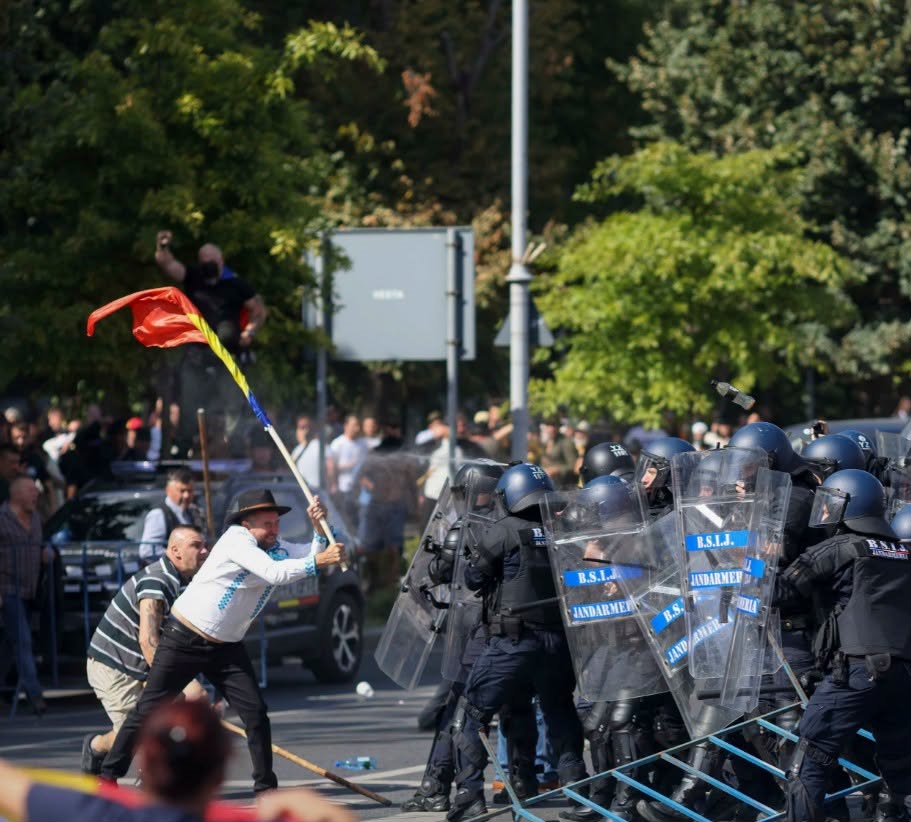
Romanian farmers clashed with police outside the government headquarters in Bucharest on Tuesday, 15 September, as a protest over a sweeping EU-backed livestock restriction spiralled into one of the most volatile agricultural demonstrations the country has seen in years. Dozens were injured, vehicles were damaged, and riot officers deployed water cannons and tear gas to push back crowds that had swelled to an estimated 4,000 people by midday.
What sparked the confrontation
The immediate trigger was a European Union directive that would prohibit traditional open-range pig farming practices across member states by the end of 2025, citing biosecurity concerns linked to African Swine Fever outbreaks that have devastated herds across Eastern Europe. For Romanian smallholders, that’s not a technicality — it’s a death sentence for a way of life. Roughly 1.2 million Romanian households still raise pigs using traditional methods passed down through generations, and many depend on the practice not just culturally but economically.
Farmers began arriving in central Bucharest before dawn, parking tractors along Calea Victoriei and blocking traffic near Piața Victoriei, where the government building sits. By 9 a.m., the crowd had grown large enough to form a continuous wall across the square. And then things turned ugly. A group of around 300 protesters surged past metal barriers, throwing eggs and debris at the building’s facade. Police in full riot gear responded within minutes.
At least 47 protesters were treated for injuries at the scene, according to Romanian Red Cross volunteers present, while local media reported 12 officers were also hurt. Six protesters were detained for questioning, though it wasn’t immediately clear whether charges would follow.
Farmers say they’re fighting for survival
The anger didn’t materialise overnight. Romanian farming groups have been raising alarms for the better part of two years, arguing that Brussels is designing agricultural policy around large industrial operators while quietly squeezing out small producers who don’t have the capital to retrofit facilities or absorb new compliance costs.
Ion Dănilă, a 58-year-old pig farmer from Olt County who drove through the night to attend the protest, said he raises 14 pigs a year on a small plot his grandfather worked before him. Under the new rules, he’d need to build an enclosed, biosecure housing structure at an estimated cost of 40,000 lei — roughly €8,000 — just to stay legal. That’s more than he earns in a year. “They want to make it so only the big farms survive,” he said. “The rest of us just disappear.”
Still, it’s worth separating the policy from the politics. African Swine Fever has genuinely ravaged pig populations across Romania, with over 600 outbreaks recorded between 2017 and 2024, according to the National Sanitary Veterinary Authority. The EU’s biosecurity push isn’t arbitrary. But critics argue the transition timeline is unrealistic for rural communities that lack both the infrastructure and the financial support to adapt quickly.
The government’s response so far
Romania’s Minister of Agriculture, Florin Barbu, issued a brief statement from inside the government building as the clashes were still ongoing outside. “We hear the farmers’ concerns and we are committed to working with European institutions to seek transitional arrangements that protect Romanian agricultural traditions,” he said. The statement did little to calm the crowd.
That gap — between careful political language and people standing in the street — is exactly what keeps protests like this from dissolving peacefully.
Prime Minister Marcel Ciolacu had been scheduled to meet with farming union representatives last week, but those talks collapsed after negotiators disagreed on the agenda. The government has since proposed a subsidy package of 850 million lei to help small farmers transition to compliant housing systems, but the farming unions say the money isn’t nearly enough and that the application process is deliberately complex. So far, fewer than 12% of eligible farmers have successfully received any funds, according to figures cited by the Pro Agro farming association.
What happens next
The protest organisers — a loose coalition of unions including Federația Fermierilor din România and the newly formed Blocul Agricol — have announced they won’t stand down. A second, larger demonstration is planned for 29 September, and organisers are calling on farmers from Moldova, Transylvania, and Dobrogea to converge on the capital. There are also discussions with counterpart groups in Bulgaria and Poland, which face similar pressures, about coordinating at the European level.
Brussels hasn’t yet responded publicly to Tuesday’s events, but EU agriculture commissioner Christophe Hansen is scheduled to visit Bucharest in October for a previously arranged meeting with Barbu. That visit now carries considerably more weight. Whether Romanian officials can broker any meaningful flexibility from the EU — a supplementary subsidy envelope, an extended compliance deadline, or a tailored exemption for holdings below a certain size — remains to be seen. But with winter approaching and slaughter season beginning in November, the window for a workable deal is closing fast.