Brussels Week Ahead: Gymnich Foreign Affairs, Competitiveness Council, EU-Western Balkans Summit set crucial pre-June Council tone
The week of 26 May to 1 June 2026 marks a critical pre-June Council intensification of EU institutional activity, with three high-profile meetings setting strategic direction across foreign affairs, competitiveness and enlargement. Foreign ministers convene for the informal Gymnich meeting on 27-28 May, the Competitiveness Council meets in dual formation (internal market and industry on 28 May, research and space on 29 May), and the EU-Western Balkans summit is set to take place in the same window. The dense agenda comes against the backdrop of intensifying focus on the Multiannual Financial Framework 2028-2034 and the 26-27 June European Council.
Gymnich on 27-28 May
The informal meeting of EU foreign affairs ministers — traditionally called “Gymnich” after the German castle where the first such meeting was held in 1974 — takes place on 27-28 May 2026. Without formal decision-making powers, the Gymnich provides the setting for frank strategic discussions among foreign ministers. The agenda is shaped by High Representative Kaja Kallas and focuses on the future of the EU’s external action in the light of geopolitical developments — including the Middle East conflict, Russia’s war on Ukraine, and the South Caucasus opening following the May summit with Armenia.
Competitiveness Council and the Industrial Accelerator Act
On 28 May 2026, during the session on internal market and industry, ministers will engage in a policy debate on the Industrial Accelerator Act. Discussions will focus on how best to leverage access to the single market through European preference and low-carbon requirements. Ministers are also expected to approve conclusions on building a sustainable and competitive tourism sector for the future. The session marks one of the first concrete tests of the new industrial policy direction set out by the Commission since the start of its term.
Research and space on 29 May
On 29 May, ministers responsible for space policy will hold an exchange of views on space for economic security. The presidency is expected to present a progress report on the EU Space Act — a flagship piece of legislation aimed at providing the EU with a regulatory framework for space activities, satellite services, and downstream commercial applications. The dossier has gained particular urgency given the increasing strategic importance of space assets for both civilian and defence purposes.
EU-Western Balkans summit
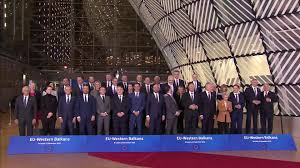
The EU-Western Balkans summit, scheduled for the same period, brings together EU institutions and leaders from Albania, Bosnia and Herzegovina, Kosovo, Montenegro, North Macedonia, and Serbia. The summit aims to maintain momentum on Western Balkans enlargement, particularly given the upcoming 8th Accession Conference with Albania. The political backdrop is one of mixed signals — concrete progress on Albania’s accession path coexisting with persistent frictions over Kosovo’s status and Serbia’s hesitations between European integration and a continued relationship with Moscow.
General Affairs Council and MFF 2028-2034
Ministers for EU affairs will begin preparations for the European Council of 26-27 June and hold a policy debate on the Union’s Multiannual Financial Framework 2028-2034. This is the next seven-year EU budget cycle, currently estimated to exceed €1.2 trillion. The General Affairs Council will also discuss the state of play of EU-UK relations — a low-key but politically sensitive file in the wake of UK Prime Minister Keir Starmer’s recent domestic difficulties.
Agriculture Council and fertilisers
Agriculture ministers will exchange views on the availability and affordability of fertilisers in the EU. They will also discuss trade-related agricultural issues. The discussion follows the Commission’s Fertilisers Action Plan, presented in May 2026 to strengthen food security and industrial supply against the backdrop of disrupted supply chains tied to Russian gas and the Iran conflict.
Justice and Home Affairs on 4-5 June
Looking beyond this week, the Justice and Home Affairs Council convenes on 4-5 June 2026. Ministers will discuss, among other items, the regulation on the cross-border recognition of parenthood, the regulation establishing the Justice programme for the next MFF period, and implementation of the EU Pact on Migration and Asylum — which enters application from 12 June 2026 and represents one of the most significant overhauls of European migration policy in a generation.
Informal defence ministers and ECB on 4-5 June
An informal meeting of EU defence ministers is scheduled for 7-8 June 2026, with an agenda expected to address EU military support for Ukraine, defence readiness, and the situation in the Middle East. The Foreign Affairs Council in Defence formation on 15 June will conclude the cycle. In parallel, the European Central Bank Governing Council meets in Frankfurt on 4-5 June 2026 for what may prove the most consequential monetary policy decision of 2026. Markets currently price approximately a 60% probability of a 25 basis point hike from the current 2.00% deposit rate.
Culture ministers and AgoraEU on 1-2 June
An informal meeting of culture ministers convenes on 1-2 June 2026. Topics include AgoraEU, the EU’s work plan for culture 2027-2030, sport tourism and sustainable development, and mental health in sport. The latter has emerged as a notable issue following increased public awareness of athlete welfare, particularly in the wake of recent high-profile cases. This intensive May-June period reflects the EU institutional cycle: pre-Council intensification, technical groundwork for June Council conclusions, and preparations for the rotating presidency taking effect from 1 July 2026.