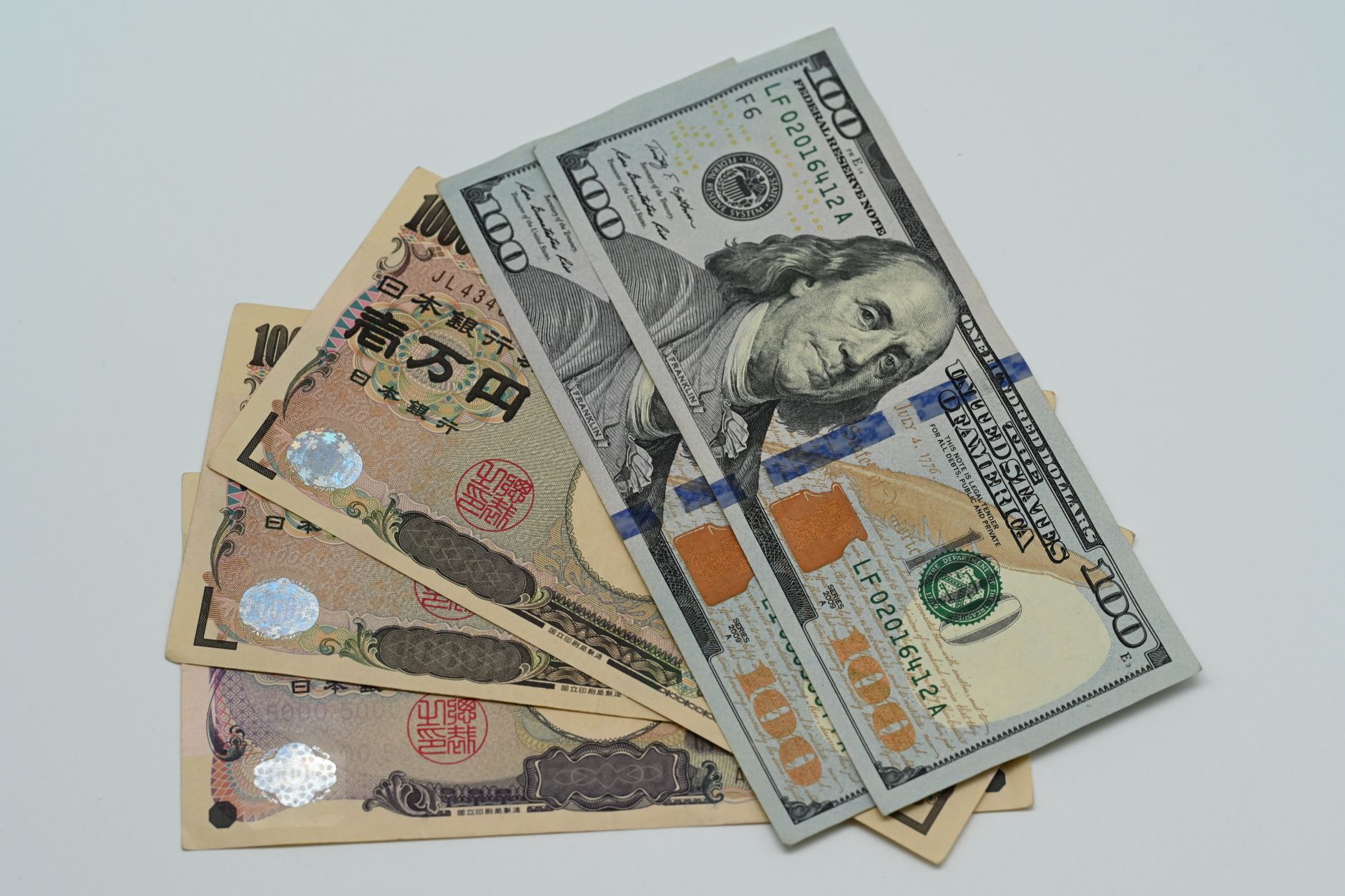
Yen intervention: US and Japan take rare joint action to prop up currency
The United States and Japan launched a rare coordinated intervention in currency markets this week, buying yen in a joint effort to halt the currency’s slide after it tumbled to levels not seen in more than three decades. The move marked a significant departure from the usual go-it-alone approach Japan has historically taken when defending its currency, and sent an immediate jolt through global financial markets.
What triggered the intervention
The yen had been under sustained pressure for months, weakening past 158 per dollar as investors continued to bet against it amid the wide gap between US and Japanese interest rates. That gap — with the Federal Reserve holding rates significantly higher than the Bank of Japan’s near-zero policy — made the dollar far more attractive to hold. The yen’s decline had already pushed import costs higher for Japanese consumers, feeding into broader inflation concerns in a country still navigating a fragile economic recovery.
It’s the kind of currency weakness that tends to look manageable on paper but hits ordinary households hard at the grocery store and the gas pump.
How the intervention worked
Treasury officials in Washington and their counterparts at Japan’s Ministry of Finance coordinated the timing and scale of dollar-selling and yen-buying operations across multiple trading sessions. Analysts estimate the combined intervention involved somewhere between $35 billion and $50 billion worth of transactions, though neither government has confirmed an exact figure. The yen strengthened roughly 3.5% against the dollar in the hours following the first round of buying, though some of those gains faded by the close of trading.
“We acted together because the situation warranted it, and we are absolutely prepared to act together again,” a senior Treasury official said, declining to be identified because of the sensitivity of ongoing currency negotiations.
A warning to markets
Both governments were unusually direct in signaling this wasn’t a one-off. Tokyo and Washington issued a joint statement saying they would not hesitate to conduct further coordinated interventions if currency conditions deteriorated. That kind of explicit forward guidance is rare. Usually, finance officials prefer ambiguity — keeping traders guessing tends to amplify the deterrent effect. But this time, they wanted the message to land clearly.
So markets are now watching every twitch in the yen with fresh attention.
What happens next
The longer-term outlook for the yen still depends heavily on when the Fed begins cutting rates and whether the Bank of Japan moves decisively to normalize its own monetary policy. Without those structural shifts, even a well-coordinated intervention can only do so much. Currency traders have a long history of testing the resolve of central banks, and $50 billion, while large, isn’t unlimited.
Still, the joint political signal matters. Washington’s willingness to step in alongside Tokyo changes the calculus for anyone thinking about aggressively shorting the yen. And that, for now, may be exactly the point.