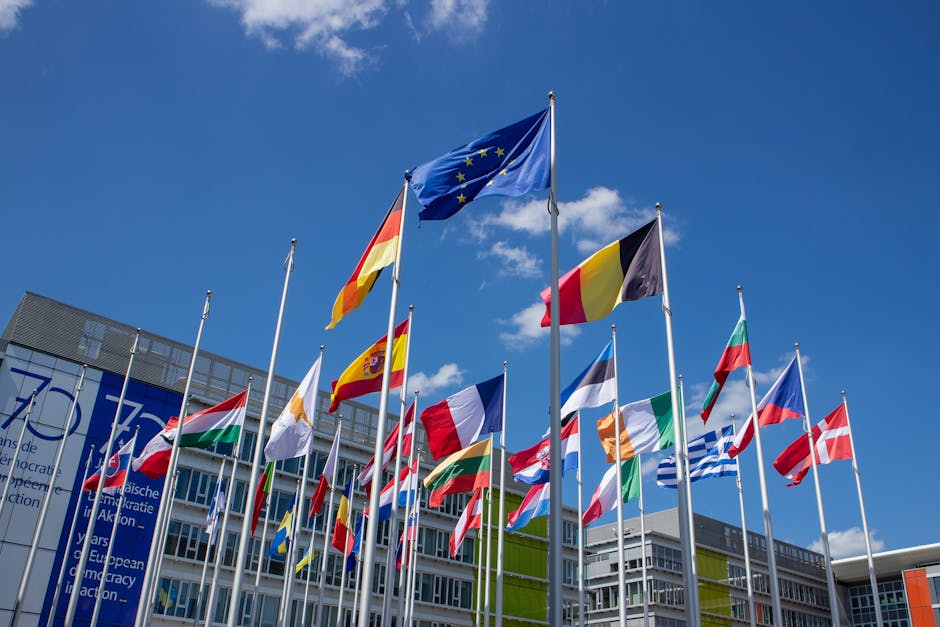
EU and South Korea expand strategic partnership in 2025
The European Union and the Republic of Korea have agreed to deepen their strategic partnership with expanded cooperation across digital technology, clean energy, and security sectors. The announcement came following high-level discussions in Brussels this week, marking a significant upgrade to the bilateral relationship that’s been building since their initial strategic partnership was established in 2010.
Officials confirmed that both sides will now collaborate more closely on semiconductor supply chains, artificial intelligence development, and cybersecurity threats. It’s a timely move given the current geopolitical climate and both regions’ shared concerns about economic security.
Technology and Trade at the Forefront
The strengthened partnership places particular emphasis on critical technology sectors. South Korea, home to global tech giants like Samsung and SK Hynix, will work alongside EU member states to secure semiconductor supply chains and reduce dependencies on third countries. The two sides are also exploring joint research initiatives in quantum computing and next-generation telecommunications infrastructure.
Trade between the EU and South Korea reached €135 billion in 2023, making the Asian nation one of Europe’s most important economic partners in the region. But this isn’t just about commerce. The partnership now includes provisions for coordinated responses to supply chain disruptions and economic coercion.
Climate and Energy Cooperation
Clean energy transition has emerged as another pillar of the expanded partnership. Both parties committed to accelerating cooperation on hydrogen technology, offshore wind development, and battery manufacturing. South Korea’s advanced battery technology and the EU’s renewable energy expertise create what officials describe as a “natural synergy.”
The two sides will establish a joint working group on critical raw materials, focusing on lithium, cobalt, and rare earth elements essential for green technology. This coordination aims to diversify supply sources and reduce vulnerabilities in clean energy supply chains.
Security and Regional Stability
Security cooperation has taken on new urgency. The partnership now includes regular dialogues on Indo-Pacific security, cyber threats, and disinformation campaigns. “Our partnership with the Republic of Korea reflects shared values and a common commitment to a rules-based international order,” a senior EU official stated during the announcement.
Yet the agreement stops short of direct military cooperation, focusing instead on maritime security, crisis management, and peacekeeping operations.
The expanded partnership will be formally reviewed annually, with the first assessment scheduled for early 2026. Both sides expressed confidence that this deepened cooperation will serve as a model for how democratic economies can work together in an increasingly fragmented global landscape.