EU AI Act recalibrated: Parliament delays high-risk rules, bans AI nudifiers
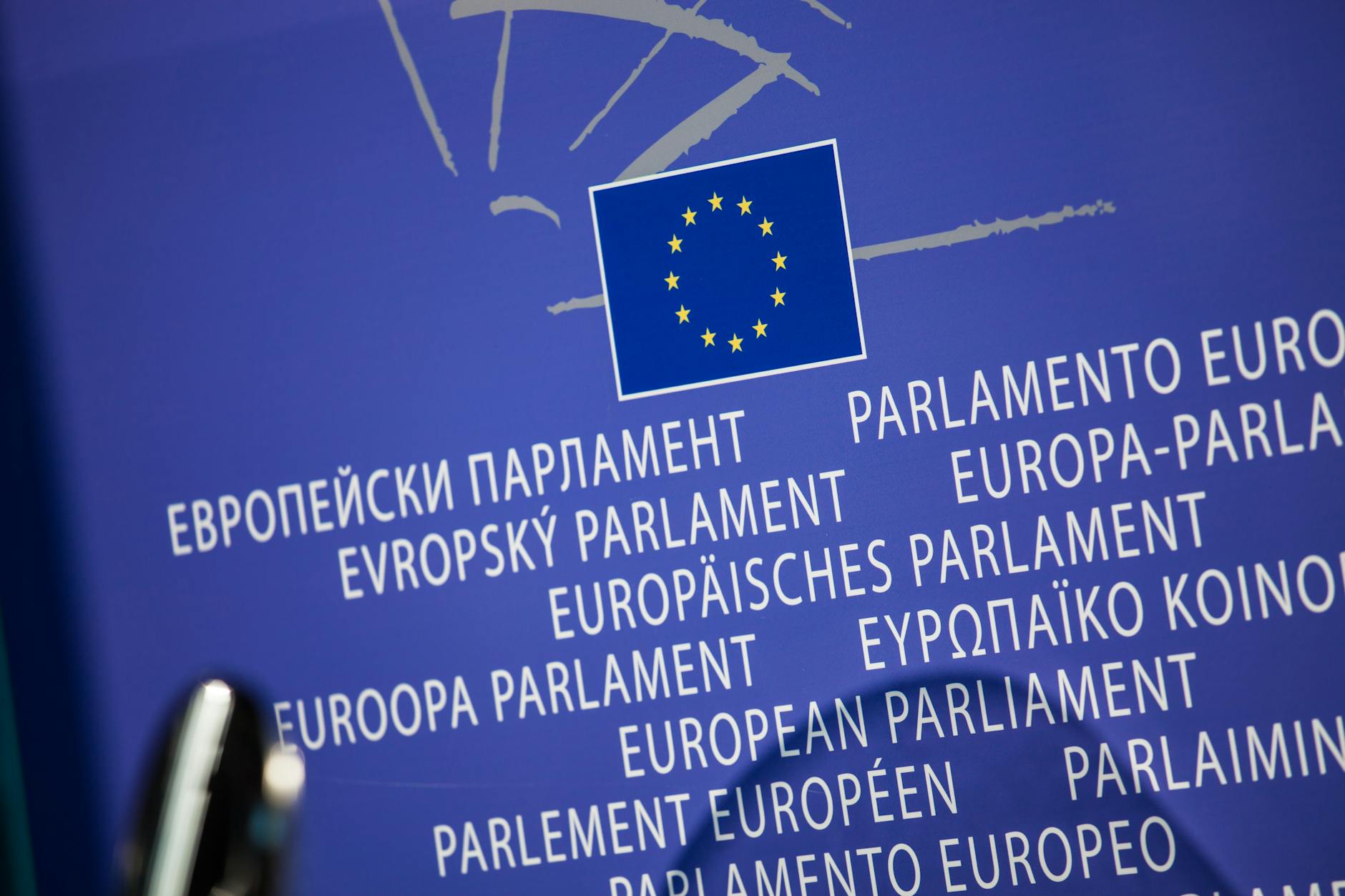
The European Parliament moved this week in Strasbourg to recalibrate the rollout of the EU’s flagship Artificial Intelligence Act, voting both to delay certain provisions for high-risk AI systems and to introduce a new prohibition on so-called AI nudifier tools — applications that generate non-consensual sexualised imagery of identifiable people. The package, debated on Wednesday and adopted before the close of the May plenary, represents one of the most politically charged AI files since the Act’s original adoption.
A two-pronged adjustment
The first component of the vote concerns timing. Parliament has agreed to delay the entry into application of certain obligations on high-risk AI systems, in response to industry warnings that compliance infrastructure — notably notified bodies and harmonised standards — is not yet fully in place across member states. The delay is intended to be limited in scope and duration, and Parliament has insisted on quarterly Commission reporting on the readiness of the conformity assessment ecosystem.
The “AI nudifier” prohibition
The second component is more eye-catching. Parliament has formally proposed an explicit ban on AI systems whose purpose is to generate non-consensual sexualised content depicting real, identifiable individuals. MEPs across political groups have framed the ban as a direct response to the proliferation of so-called “deepfake nude” applications targeting women, minors and public figures, and to the inadequacy of the Act’s existing prohibited-practices list to capture this specific category of harm.
Where the AI Act stood before this week
Adopted in 2024 and entering into application in stages, the AI Act already prohibits a defined list of practices — social scoring by public authorities, certain forms of biometric categorisation, real-time remote biometric identification in public spaces with narrow exceptions, and AI exploiting vulnerabilities of specific groups. High-risk systems, including those used in employment, education, essential services and law enforcement, are subject to a layered regime of risk management, data governance, transparency and human oversight requirements. This week’s vote operates at the boundary of those two regimes: extending the prohibited list, while easing transition obligations for the high-risk tier.
The trade dimension
The plenary also addressed AI in trade policy more broadly, in a debate that exposed how AI is reshaping the Union’s external economic relations. With Washington and Beijing pursuing very different regulatory and industrial-policy paths on artificial intelligence, MEPs across groups have called on the Commission to ensure that EU trade agreements and digital partnerships explicitly anchor European AI standards, rather than allowing them to be diluted by reciprocity claims from less stringent jurisdictions.
Industry and civil society reactions
Industry associations representing European AI developers have welcomed the high-risk delay as a pragmatic step that recognises the operational reality of compliance, while warning against any further extension that would erode the predictability of the Act. Civil society organisations, by contrast, have placed the spotlight on the nudifier ban, with several rights groups arguing that the prohibition should be paired with strengthened enforcement against platforms hosting the underlying applications and against payment processors facilitating their commercialisation.
What happens next
The Parliament’s position will now feed into trilogue negotiations with the Council, which has been more cautious on both the delay and the explicit nudifier ban. The Commission, for its part, has signalled openness to incorporating the prohibition in a forthcoming implementing act, provided that the wording is sufficiently precise to withstand judicial scrutiny under the Charter of Fundamental Rights. A final political agreement is expected before the summer recess, with formal adoption likely in the autumn.
A broader recalibration
Taken together, the votes mark a maturation of European AI policy: less a question of whether to regulate, more a question of how to sequence rules, target the most acute harms, and maintain the Union’s credibility as a global rule-setter. With the AI Act now in active implementation, every subsequent decision will be tested against two questions — does it close concrete gaps in protection, and does it preserve Europe’s ability to compete with jurisdictions that have chosen a lighter touch?