Nuclear testing survivors: ‘Every step towards disarmament matters’
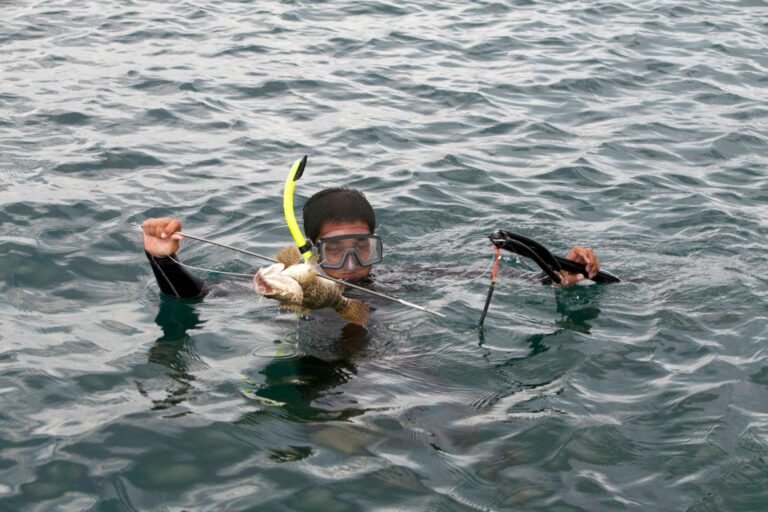
Karipbek Kuyukov was born without arms. His mother lived near the Semipalatinsk nuclear test site in Kazakhstan, where the Soviet Union detonated more than 450 nuclear devices between 1949 and 1989. He paints with his feet and his mouth. And he has spent decades telling the world what those explosions actually cost.
A legacy written on the body
The Semipalatinsk site, known locally as The Polygon, sits across roughly 18,000 square kilometres of northeastern Kazakhstan. For forty years, residents weren’t told what was happening. They watched strange clouds rise over the steppe. Their children were born with limb deformities, cancer rates surged, and thyroid disease became ordinary. Kuyukov, now in his fifties, is among an estimated 1.5 million people affected by the testing programme. He’s become one of the most recognisable voices in the global anti-nuclear movement, and his message hasn’t changed: disarmament isn’t abstract. It’s personal.
‘Every step towards disarmament matters,’ he told delegates at a recent international forum on nuclear weapons. ‘People think this is history. For us, it’s still happening in our bodies, in our children.’
The push for accountability
Survivors from Kazakhstan joined advocates from the Marshall Islands, French Polynesia, Algeria, and Nevada this week to push governments toward concrete commitments under the Treaty on the Prohibition of Nuclear Weapons, which entered into force in January 2021. So far, 93 countries have signed it. But not a single nuclear-armed state has joined. That gap is exactly what frustrates campaigners.
A spokesperson for the International Campaign to Abolish Nuclear Weapons said the testimonies of affected communities ‘must be at the centre of every policy discussion, not treated as footnotes.’
Still, progress has been slow. The nine countries currently possessing nuclear weapons — the United States, Russia, China, the United Kingdom, France, India, Pakistan, Israel, and North Korea — remain outside the treaty framework entirely.
The science hasn’t gone quiet
Research published in recent years continues to document elevated cancer rates and genetic anomalies in communities near former test sites. A 2022 study tracking third-generation descendants of Semipalatinsk residents found statistically significant increases in certain chromosomal abnormalities. It’s not just Kazakhstan. Communities downwind of U.S. tests in Nevada reported similar patterns for decades before receiving any federal recognition — and compensation only arrived for some victims in 1990, under the Radiation Exposure Compensation Act.
The science keeps confirming what survivors already knew.
What comes next
Advocates are pushing for the second Meeting of States Parties to the prohibition treaty to adopt a stronger victims’ assistance framework before the end of the year. They want funding commitments, not just language. Kuyukov plans to continue speaking at international forums through 2025, including events tied to the 80th anniversary of the Hiroshima and Nagasaki bombings in August. He won’t stop. He says he can’t afford to.