Pope Leo ends France trip in Metz, spotlighting EU unity
A farewell with a message
Pope Leo XIV ended his four-day visit to France on Monday in Metz — a city that sits at the intersection of French, German, and Luxembourg borderlands — by delivering one of his most politically charged speeches of the entire trip. Standing in a region that has changed hands between nations more than once in living memory, he urged Europe not to abandon the Christian roots and spirit of reconciliation that he said gave birth to the modern European project after the devastation of World War II.
“The desire for domination,” the pope said, “is behind so many of today’s conflicts. Europe has known this temptation. It has also found its way out of it.”
The crowd in Metz numbered roughly 35,000, according to local diocesan officials — smaller than the 200,000-strong gathering that had greeted him in Paris two days earlier, but no less fervent. And in many ways, the intimate scale felt deliberate. Metz wasn’t chosen for spectacle. It was chosen for symbolism.
Schuman’s shadow looms large
Central to Monday’s ceremony was Robert Schuman, the French statesman born in Luxembourg in 1886 who served as France’s foreign minister and is widely considered one of the founding fathers of what would eventually become the European Union. His 1950 Schuman Declaration — which proposed pooling French and German coal and steel production under a common authority — is still celebrated every May 9th as Europe Day.
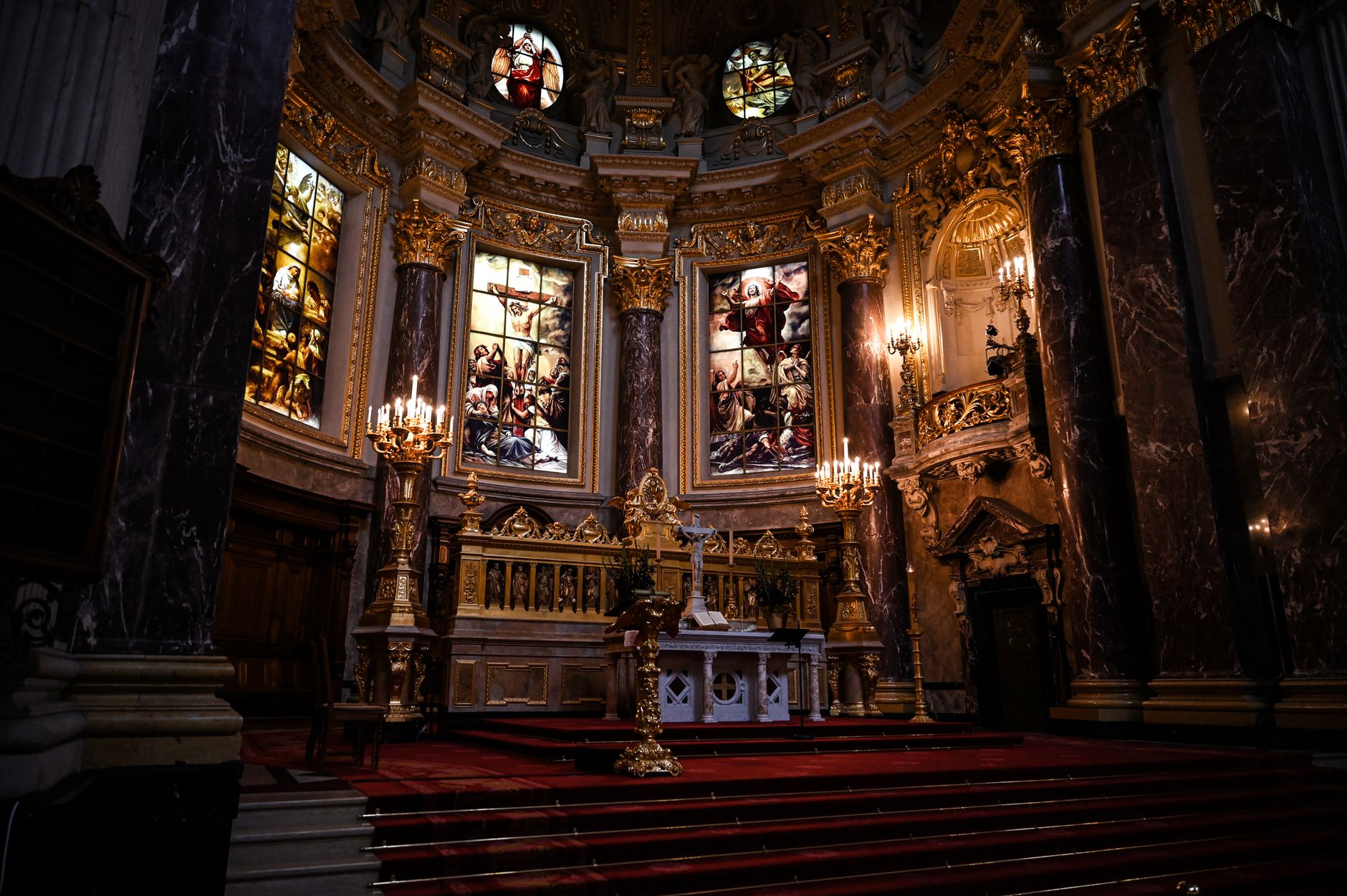
Schuman was beatified by the Catholic Church in 2021, and Pope Leo made a point of venerating his memory at the Cathedral of Saint-Étienne in Metz, where a reliquary connected to Schuman is kept. The pope knelt in prayer for several minutes before the altar, a gesture that drew applause from those inside the cathedral.
Schuman’s cause for sainthood has been a long-running project within the Church. Leo’s predecessor, Pope Francis, advanced the process during his own pontificate. But Leo’s personal endorsement in Metz — on French soil, in front of European officials — felt like a deliberate acceleration of that timeline.
A pointed political message
Leo didn’t name any country or conflict directly. He didn’t have to. With the war in Ukraine now entering its fourth year and tensions rising in the Middle East, the references were plain enough. “Peace is not simply the absence of war,” he said. “It is built, day by day, through dialogue, through humility, through the willingness to see the other not as a threat but as a partner.”
It’s a message that resonated with European officials in attendance. A senior EU representative, speaking on background after the event, called the pope’s remarks “exactly the kind of moral clarity that European leaders need to hear right now, even if it’s uncomfortable.”
Still, Leo was careful not to frame the speech as a partisan political statement. He acknowledged Europe’s failures — its colonial past, its internal divisions, its current struggles with migration and inequality — with a directness that surprised some observers.
France’s complicated relationship with the Church
The four-day trip wasn’t without friction. France is one of the most secular nations in the developed world, and the visit sparked protests in Paris from groups arguing that a papal trip that included meetings with government ministers blurred the country’s strict separation of church and state, known as laïcité. Roughly 1,200 protesters gathered near the Élysée Palace on Saturday, though demonstrations remained peaceful.
French President Emmanuel Macron met with Leo on Saturday for just under two hours — 112 minutes, according to the Élysée — covering topics that included the war in Ukraine, artificial intelligence governance, and poverty. No joint statement was issued, which itself became a talking point.
What comes next
Leo’s next major international trip hasn’t been formally announced, but Vatican sources have indicated that a visit to Eastern Europe — possibly Poland or Hungary — is being discussed for later this year. Both countries carry deep Catholic traditions but sharply different political currents, and a papal visit to either would carry enormous symbolic weight.
For now, the Metz speech will likely be remembered as one of the defining moments of Leo’s early pontificate — a clear declaration that he sees Europe’s Christian heritage not as nostalgia, but as a living resource for a continent that badly needs one.
Whether Europe’s leaders are listening is another question entirely.