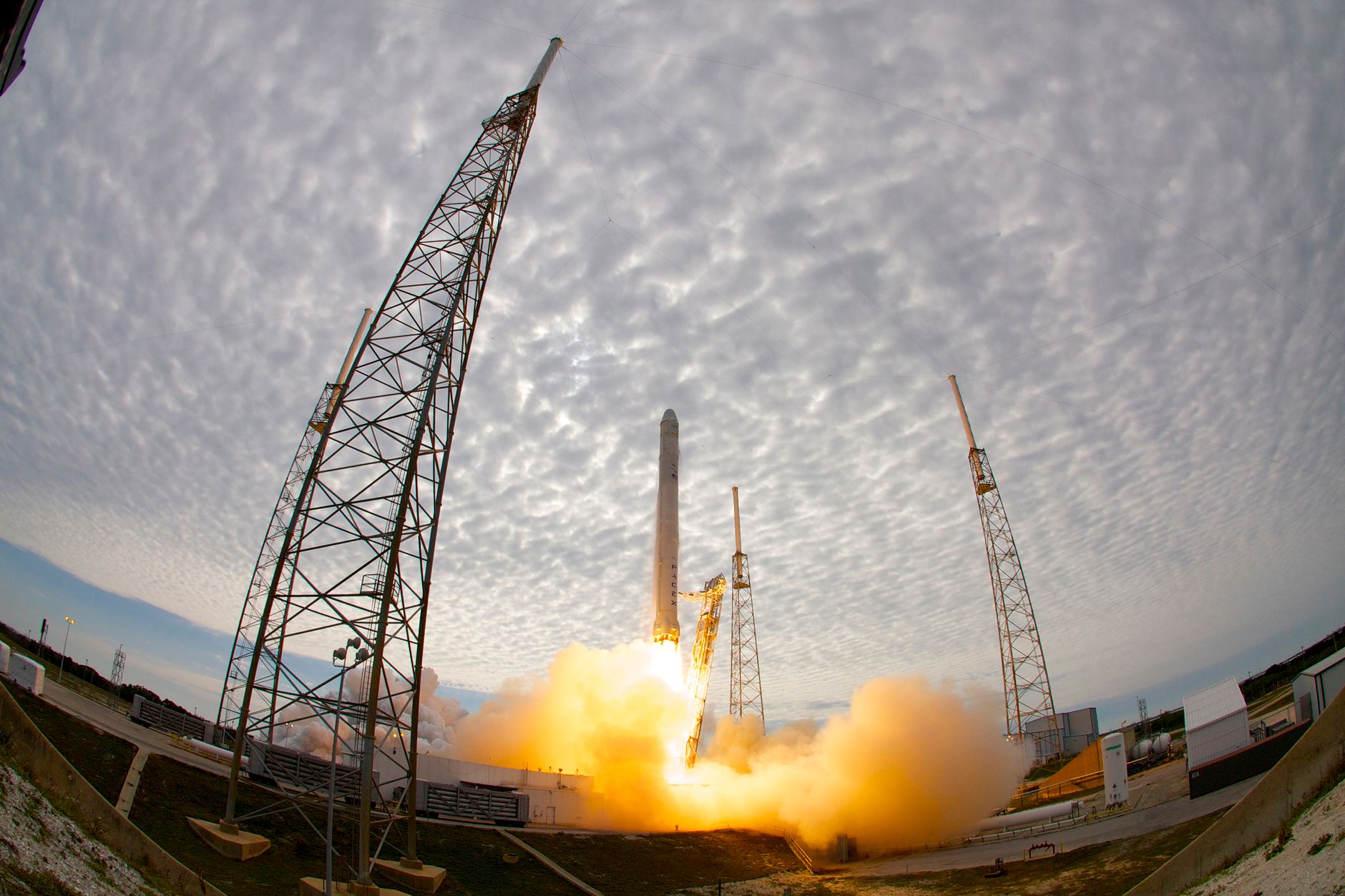
Starship reaches orbit for the first time in landmark SpaceX test
SpaceX’s Starship rocket achieved orbit for the first time in a high-stakes test flight on Thursday, marking a pivotal milestone for the most powerful launch vehicle ever built — though the mission ended earlier than planned when the spacecraft was lost before completing its full profile.
A giant leap for the world’s biggest rocket
Starship lifted off from SpaceX’s Starbase facility in South Texas, and within minutes the 123-meter-tall vehicle had punched through the atmosphere and reached orbital velocity for the first time in the program’s history. It’s a feat that had eluded the company across several previous test attempts, which ended in dramatic explosions during ascent or shortly after stage separation.
The vehicle’s Super Heavy booster, powered by 33 Raptor engines and producing roughly 16.7 million pounds of thrust at liftoff, performed a controlled boostback burn and splashed down in the Gulf of Mexico as intended. That alone was a significant technical achievement. But it was the upper stage — the spacecraft itself — that carried the real weight of expectation Thursday.
Starship reached an altitude of approximately 212 kilometers and achieved orbital velocity before contact was lost around 49 minutes into the flight. SpaceX had planned for the vehicle to complete a partial orbit and reenter over the Indian Ocean, but that final phase never came.
What went wrong — and why it still matters
The exact cause of the early termination is still under review. SpaceX has not confirmed whether the loss was triggered by an automated flight termination system, a mechanical failure, or something else entirely. The company is expected to release a full preliminary assessment within days.
Still, engineers inside SpaceX’s mission control erupted in cheers when orbital velocity was confirmed. And that reaction wasn’t just theater.
“Reaching orbit for the first time is a defining moment for this program, and for commercial spaceflight broadly,” said a NASA spokesperson, whose agency has a vested interest in Starship’s success — the rocket is central to NASA’s Artemis lunar lander contract. “We’ll work closely with SpaceX to understand what happened in the final phase of flight.”
SpaceX itself has always framed Starship development as an iterative process. The company doesn’t treat anomalies the same way a traditional aerospace contractor might. Each flight, successful or not, feeds engineering data back into the next design iteration. That philosophy has worked before — Falcon 9 didn’t nail its first landing either.
What comes next for Starship
SpaceX will need to file an updated mishap report with the Federal Aviation Administration before it can launch again. The FAA has historically taken weeks to months to review such reports, meaning the next test flight is unlikely before late this year at the earliest.
The stakes couldn’t be higher. NASA is counting on Starship to land American astronauts on the Moon under the Artemis III mission, currently targeting 2026. Beyond that, SpaceX founder Elon Musk has laid out ambitions to use Starship for Mars cargo missions as early as 2028.
Thursday’s flight won’t satisfy everyone. It’s not a complete success by any conventional measure. But it’s the closest Starship has ever come — and in a program defined by learning through failure, that gap is narrowing fast.