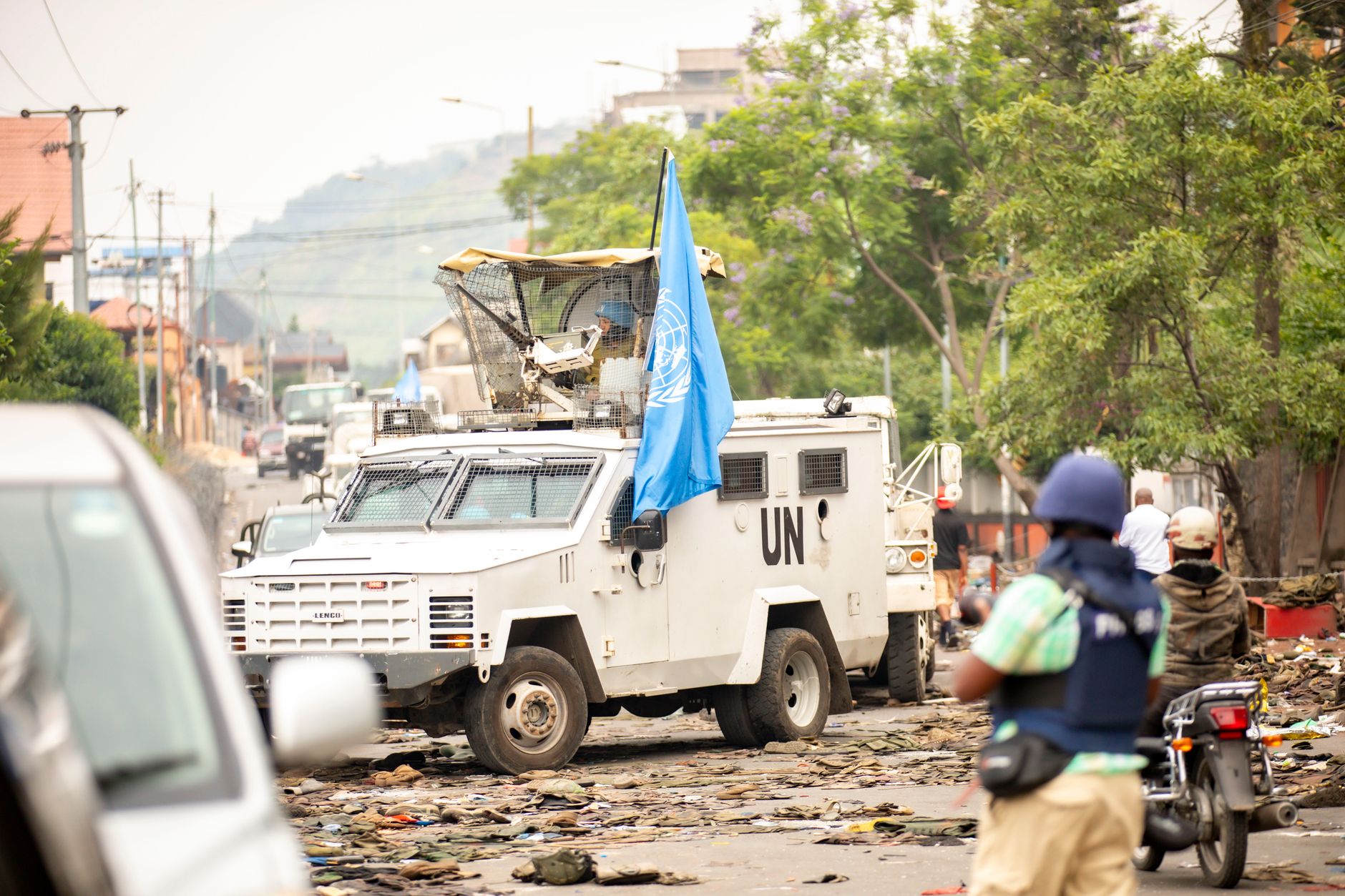
Security Council tackles Central Africa crisis and LRA threat
The UN Security Council convened this morning to confront one of Africa’s most enduring security nightmares—the Lord’s Resistance Army, a militant group that’s left a trail of devastation across Central Africa for nearly four decades.
Ambassadors heard briefings from the UN Regional Office for Central Africa (UNOCA) on efforts to combat the LRA, which the organization estimates has been responsible for over 100,000 deaths since its inception. The group, which originated in Uganda in the 1980s, has spread violence across borders into the Democratic Republic of Congo, South Sudan, and the Central African Republic.
A Persistent Regional Menace
The LRA’s continued operations represent a grim reality for Central African communities. While its numbers have dwindled from thousands to an estimated few hundred fighters, the group maintains its capacity to terrorize civilians through abductions, killings, and forced recruitment of child soldiers.
But today’s session wasn’t solely about the LRA. Council members also discussed UNOCA’s broader strategy for tackling interconnected challenges: improving civilian protection, ensuring humanitarian access, and strengthening cross-border cooperation among affected nations. These issues have grown more urgent as climate change and resource scarcity fuel additional conflicts.
The Challenge of Cross-Border Coordination
The LRA’s ability to operate across multiple jurisdictions has long complicated efforts to neutralize the threat. That’s why UNOCA has prioritized regional cooperation mechanisms, pushing for coordinated military operations and intelligence sharing among neighboring countries.
Yet progress has been frustratingly slow. Limited resources, political instability in affected nations, and the group’s tactical adaptability have allowed it to survive repeated offensives. The militants operate in remote areas where state presence is minimal and where dense forests provide natural cover.
A senior UN official familiar with the briefing noted that “sustained international attention and resources are critical if we’re going to finally end this chapter of violence and bring justice to victims.”
Looking Ahead
The Security Council’s focus on Central Africa comes at a pivotal moment. Regional leaders have called for renewed international support, including funding for military operations and programs to rehabilitate former LRA fighters and abductees.
Humanitarian organizations working in affected areas continue to report sporadic LRA attacks, though the frequency has decreased in recent years. Still, communities remain on edge, and thousands of displaced persons can’t return home while the threat persists.
The Council is expected to consider how UN peacekeeping missions in the region can better coordinate with UNOCA’s mandate. Whether today’s discussions translate into concrete action—and whether that action can finally dismantle what remains of the LRA—will become clear in the coming months.