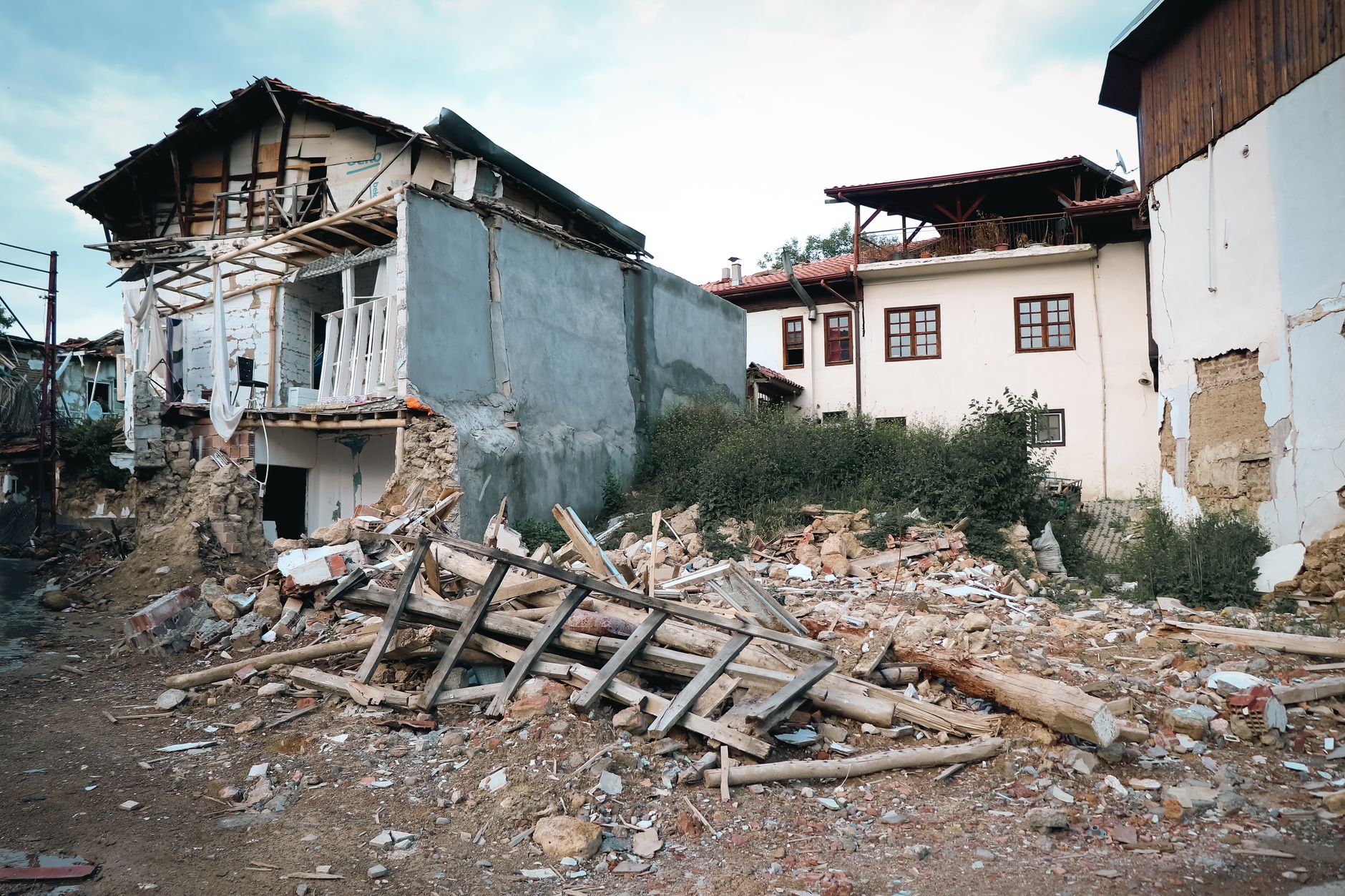
Syrians returning home find ruins, red tape and broken dreams
Nearly 3.6 million Syrians have crossed back into their country since the fall of Bashar al-Assad’s government, drawn by hope and the pull of home. But what many found waiting for them was something far harder to navigate than they had imagined.
Coming back to rubble
For families who left everything behind — sometimes a decade ago — the return has been a collision with reality. Houses that once stood are now skeletal frames or piles of concrete. Entire neighborhoods in Aleppo, Homs and the outskirts of Damascus look like they were frozen mid-demolition. Some returnees arrived to find strangers living in their homes, or worse, nothing standing at all.
Khalil, a 43-year-old carpenter who came back from Turkey after 11 years, told Euronews he spent his first three weeks sleeping in his brother-in-law’s damaged apartment. “I knew it would be hard,” he said. “I didn’t know it would be like this.”
A bureaucracy that barely functions
Beyond the physical destruction, there’s a government apparatus still struggling to operate. Basic services — electricity, clean water, civil documentation — remain deeply unreliable. Power cuts in many areas last anywhere from 10 to 18 hours a day. Getting official paperwork processed can take weeks, if it happens at all.
Returnees trying to reclaim property or register children in schools have run into a wall of outdated records and missing personnel. Many government offices are understaffed or still sorting out which laws and regulations even apply under the transitional administration.
A spokesperson for the UN Refugee Agency described the situation as “deeply fragile” and stressed that sustainable return requires more than open borders — it requires functioning institutions, safety guarantees and economic opportunity.
Wages that don’t add up
The economic gap is brutal. Syrians who spent years working in Germany, Sweden or the Gulf states earned salaries that were, in some cases, 20 to 40 times what they can expect to make back home. The Syrian pound remains extremely weak. A skilled worker in Damascus might earn the equivalent of $50 to $80 a month. That’s not enough.
Some returnees are quietly applying for visas again. Others are weighing whether to send their children back to relatives abroad while they try to stabilize something at home.
Some are choosing to stay — and build
Still, not everyone is despairing. A small but determined group of returnees is actively investing in rebuilding. Young entrepreneurs, former refugees with savings and skills picked up abroad, are opening small businesses and buying into the idea that now is the moment to shape what Syria becomes next.
It’s a fragile optimism. And it won’t survive without serious international support, structural investment and a political process that actually holds together.
Whether Syria’s return story becomes one of recovery or renewed displacement may depend on decisions made in the next 12 to 18 months — by Syrian leaders, international donors and the millions still weighing whether to pack their bags again.