Xi’s hold on Trump tightens, leaving Europe exposed
The geopolitical ground is shifting fast. As Chinese President Xi Jinping appears to consolidate influence over Donald Trump’s trade and foreign policy instincts, European leaders are watching with growing unease — and scrambling to figure out what it means for their own economic and security future. The fear isn’t abstract. It’s playing out in real time, in tariff negotiations, in NATO commitments, and in back-channel diplomacy that Brussels is largely excluded from.
A bilateral reset that leaves Brussels in the cold
When Trump paused his sweeping tariffs on Chinese goods in May 2025 — reducing them from a punishing 145 percent to 30 percent after just 90 days of pressure — European capitals barely got a heads-up. The deal, hammered out in Geneva over a single weekend, was framed as a temporary truce. But it sent a clear message: Washington and Beijing can find common ground quickly when they want to, and Europe doesn’t have to be in the room.
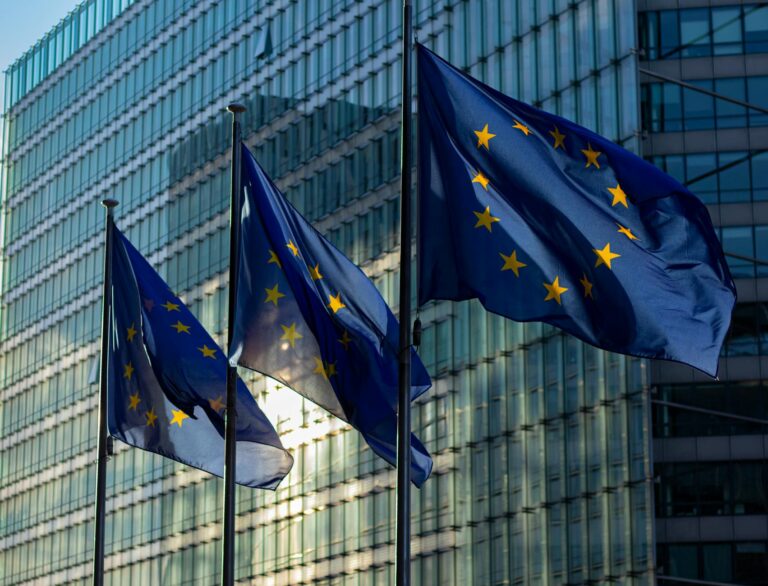
The EU, meanwhile, is still navigating a separate and considerably messier tariff standoff with Washington. American levies on European steel and aluminum remain in place. A 10 percent baseline tariff on most European exports is still active. Negotiations have crawled forward at a pace one senior EU trade official described as “frustratingly slow, with no clear endpoint in sight.”
That asymmetry — Beijing getting a deal, Brussels getting stalled talks — is exactly what’s rattling European policymakers. And it’s not just about trade. Trump’s warmer posture toward Xi has started bleeding into the security conversation too. His repeated suggestions that NATO allies need to spend 5 percent of GDP on defense, while simultaneously signaling openness to Chinese investment frameworks in third markets, has produced a disorienting mix of signals that Europe is struggling to decode.
Still, some analysts caution against overreading the dynamic. The Geneva truce was narrow and time-limited. But the symbolism was loud.
Why Trump’s China pivot worries Europe’s strategists
Part of what’s driving European anxiety is the speed of the shift. As recently as early 2025, Trump was describing China as America’s “greatest threat” and promising tariffs that would, in his words, “end their economic model.” By late spring, he was praising Xi as a “great man” and floating the possibility of a broader economic partnership. That’s a remarkable reversal in a matter of weeks.
European strategists have spent three years building a new vocabulary for dealing with China — “de-risking” rather than decoupling, managing dependencies in semiconductors, critical minerals, and green technology without fully severing ties. It was a careful, deliberate posture. And it was largely calibrated around the assumption that Washington and Brussels were rowing in roughly the same direction.
That assumption is now seriously in doubt.
If Trump and Xi are edging toward some kind of grand bargain — or even a loose accommodation — Europe could find itself squeezed on multiple fronts simultaneously. Chinese electric vehicles are already flooding European markets, forcing the EU to impose tariffs of up to 35 percent on top of existing duties. A U.S.-China arrangement that carves out market access or investment flows could accelerate that pressure, effectively redirecting Chinese industrial capacity into European markets while Washington looks the other way.
“We are entering a period where the transatlantic relationship can no longer be taken for granted as the anchor of Western economic strategy,” a senior European Commission official said this week, speaking on condition of anonymity. “That requires us to be much more self-reliant than we have been comfortable being.”
It’s a blunt assessment. And it reflects a broader mood shift inside EU institutions that has been building since Trump’s return to the White House in January.
What Europe can actually do about it
The honest answer is: not that much, at least in the short term. European leverage over Washington is limited. The EU is not a military superpower, its internal divisions on China policy are significant — with countries like Hungary actively blocking stronger measures — and its ability to move quickly on trade deals is constrained by its own institutional complexity.
But there are moves being made. The European Commission is pushing ahead with its own trade diversification agenda, accelerating negotiations with Mercosur, India, and Southeast Asian nations. The €800 billion ReArm Europe plan signals a serious attempt to reduce dependence on American security guarantees. And von der Leyen’s team has been quietly engaging Beijing directly, trying to establish Brussels as a third pole in the global trade order rather than a passive bystander.
None of that is fast enough to matter in the immediate term. The 90-day U.S.-China tariff truce expires in August 2025, and whatever comes next will shape the global trade environment well into 2026. Europe’s window to position itself before those next moves crystallize is narrow.
What’s clear is that the era of European leaders being able to rely on Washington as a predictable ally — one that, whatever its faults, broadly shared a strategic interest in a rules-based international order — is over. Whether what replaces it is a U.S.-China condominium, a chaotic multipolar scramble, or something else entirely, Europe is going to have to find its footing fast. The margin for hesitation is shrinking by the week.