EU Plenary opens in Strasbourg: Iran, Ukraine, steel and a new order of merit
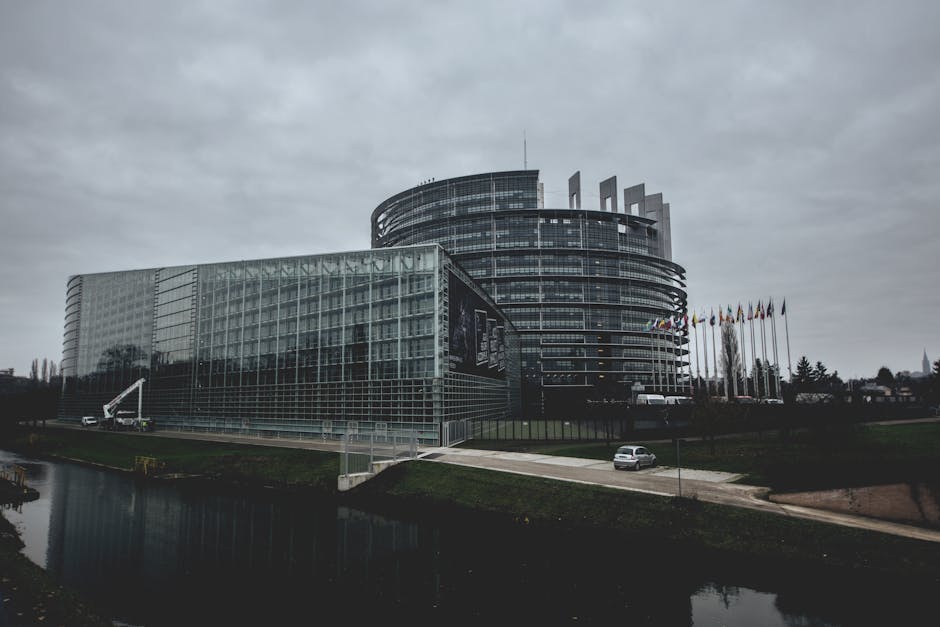
The European Parliament opened the May 2026 plenary part-session in Strasbourg on the afternoon of Monday 18 May, with President Roberta Metsola presiding over the first sitting at 17:00 BST after a 16:15 working meeting with European Commission President Ursula von der Leyen. The four-day session, running through Thursday 21 May, will address some of the heaviest files of the legislative term: the Middle East crisis, EU steel safeguards, Ukraine, foreign investment screening, AI in trade policy and the inaugural ceremony of the European Order of Merit.
The opening choreography
Monday’s schedule was unusually condensed. After her meeting with von der Leyen, Metsola opened the plenary at 17:00 and, at 17:30, inaugurated the EU Defence Exhibition – a thematic installation in the Parliament’s Strasbourg buildings designed to showcase European defence industrial capacity at a moment when Iran, Ukraine and the wider security architecture sit at the top of the political agenda. The Parliament’s Bureau, which Metsola chaired at 18:00, took routine institutional decisions on personnel and budget execution.
Question Time returns – Kallas on the Middle East
For the first time after a prolonged hiatus, plenary will host a dedicated Question Time. The High Representative for Foreign Affairs and Security Policy, Kaja Kallas, will respond to Members on the EU’s strategy regarding the ongoing Middle East crises – the war between the United States, Israel and Iran formally suspended by the April ceasefire, the continued partial blockade of the Strait of Hormuz, and the simmering Israel-Hezbollah situation in Lebanon. The exchange is expected to be among the week’s most closely watched, with Greens-EFA and Renew Europe likely to press Kallas on the Union’s diplomatic positioning.
The first European Order of Merit ceremony
Tuesday brings a ceremonial highlight: the inaugural award ceremony of the European Order of Merit, established by Parliament in 2025 to recognise contributions to European integration and the promotion of European values. President Metsola announced the 20 laureates in March 2026; among them, former German Chancellor Angela Merkel, former Solidarność leader and Polish President Lech Wałęsa, and Ukrainian President Volodymyr Zelensky will become Distinguished Members. The award invests the Parliament with a soft-power instrument analogous to a head-of-state honours system, and will likely become a recurring fixture of the European calendar.
Steel safeguards: 50% out-of-quota duty heads to vote
Among the legislative files, the steel safeguard package is the most consequential. The trilogue agreement of 14 April between Council, Parliament and Commission – setting the out-of-quota duty at 50% (double the current 25%), cutting tariff-free imports to 18.3 million tonnes per year (a 47% reduction) and introducing a Melt and Pour traceability requirement – heads to plenary endorsement during the week. Entry into force is scheduled for 1 July 2026, ahead of the expiry on 30 June of the 2018 measures.
Foreign investment screening and AI in trade
Two structural files complete the week’s agenda. The reform of the EU foreign direct investment screening regime, which since 2020 has provided a Union-level coordination mechanism for member-state reviews, is up for a key vote. The new regime tightens reporting thresholds and broadens the perimeter of screened sectors to include semiconductors, biotechnology and dual-use AI applications. Separately, the Parliament will address the integration of AI tools into EU trade policy – a horizontal initiative spearheaded by DG Trade with input from DG CONNECT.
The unfinished business of Ukraine
The May plenary continues to operate against the backdrop of the war in Ukraine and the EU’s accession to the Special Tribunal for the Crime of Aggression, formally inaugurated on 15 May. The Strasbourg week will produce no spectacular new instrument on Ukraine, but it will allow a stocktaking of the Union’s posture – its bilateral aid commitments, its position on the use of frozen Russian assets (€190 billion at Euroclear in Brussels) and its contribution to security guarantees in any eventual settlement framework. The Tribunal accession, by itself, will not resolve the underlying questions. It does, however, make their deferral harder to sustain.