Poland’s constitutional battle plays into Putin’s hands
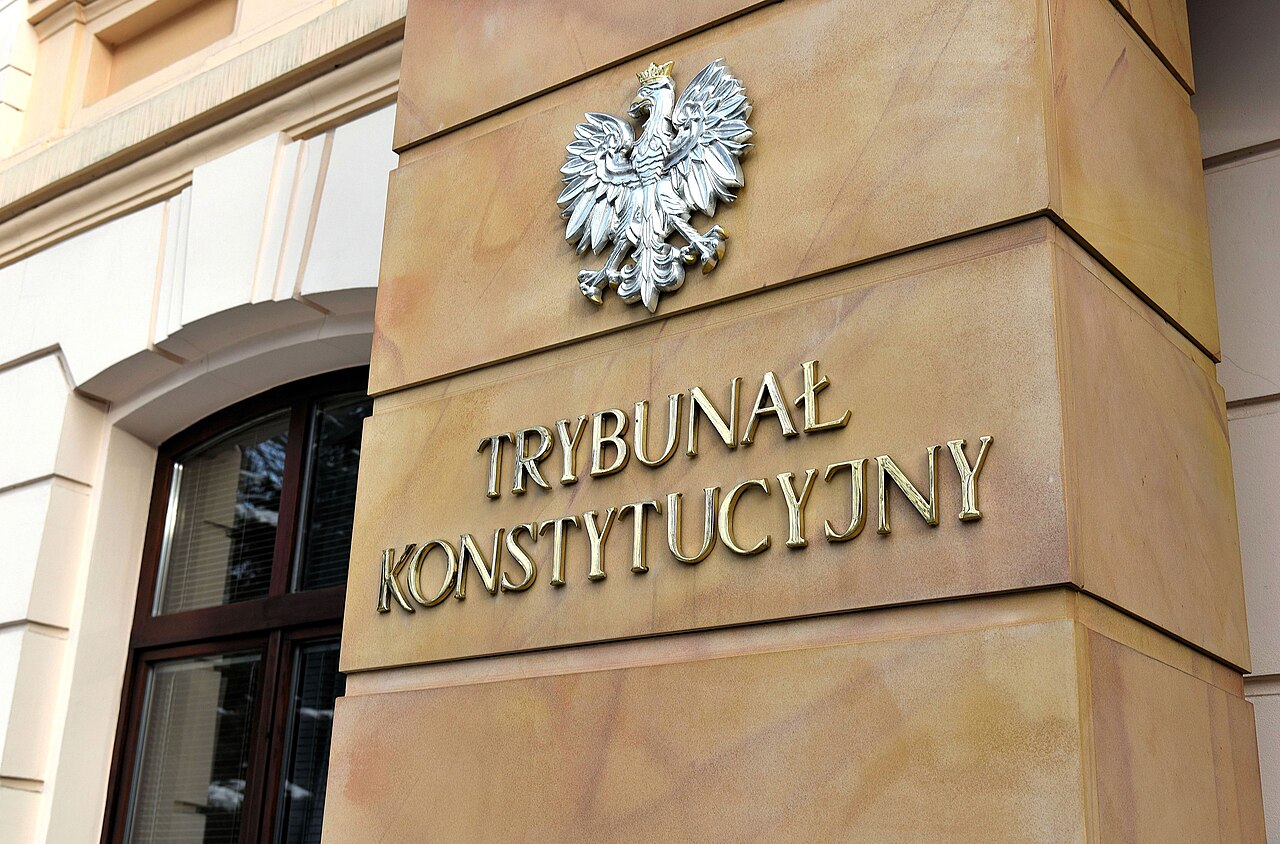
The struggle between Poland’s two main political camps over the Constitutional Tribunal is a gift to Vladimir Putin. Both sides claim to defend the rule of law, yet their actions undermine the legitimacy of the Polish state. That’s exactly what Moscow wants.
A decade of mutual sabotage
In 2015, the outgoing Civic Platform government tried to appoint judges to the Tribunal for vacancies that should have been left to the incoming parliament. The newly elected Law and Justice party used the controversy to pack the Tribunal with its own nominees. Now Civic Platform is back in power and doing the same thing in reverse.
Last month, one newly elected judge ordered the suspension of the Tribunal’s president and deputy. Police were deployed to the building. President Karol Nawrocki, aligned with Law and Justice, called it a forcible takeover. Prime Minister Donald Tusk defended the move as an effort to restore the rule of law. But the optics are troubling: Tusk is playing the strongman, and photos of him reading a journal issue devoted to Carl Schmitt have circulated widely on social media. Schmitt declared: “Sovereign is he who decides on the exception.”
Moscow seizes the moment
Russia has been quick to exploit the chaos. On November 3, former Russian President Dmitry Medvedev described the intervention as a “coup.” The aim is to cast doubt on the legitimacy of Poland’s institutions. And it’s working: the two main parties have become mirror images of one another. Law and Justice is now calling supporters to the streets to defend the rule of law—the very slogan once used by the liberal opposition.
But Poles are unlikely to turn out in the millions this time. They’re tired of the tug-of-war. Both blocs show hypocrisy when they invoke the rule of law over force. The fight doesn’t speak to everyday concerns like the cost of living or the safety of a country with an aggressive neighbour waging a hot war on its border and a hybrid war inside it.
A dangerous precedent
The geopolitical context has changed dramatically. Russia’s full-scale war in Ukraine and its information warfare are aimed at weakening Poland’s global position. In the worst case, the struggle over legitimacy could extend to elections. There is a precedent: in Romania on December 6, 2024, the Constitutional Court annulled a presidential election after intelligence reports of alleged foreign interference and ordered the process repeated.
Such a scenario is possible in Central and Eastern Europe, including Poland. The liberal establishment could adopt measures overriding electoral outcomes, while the opposition becomes increasingly anti-establishment. Foreign interference may be real, not invented. Two forces are squeezing the middle ground: social media platforms controlled by foreign superpowers that manipulate emotions and fuel distrust, and the decisionism of an establishment governing through politically subordinated courts. If healing is possible, it will not come from the existing political forces. No one is happier about this self-reinforcing dynamic than Putin.