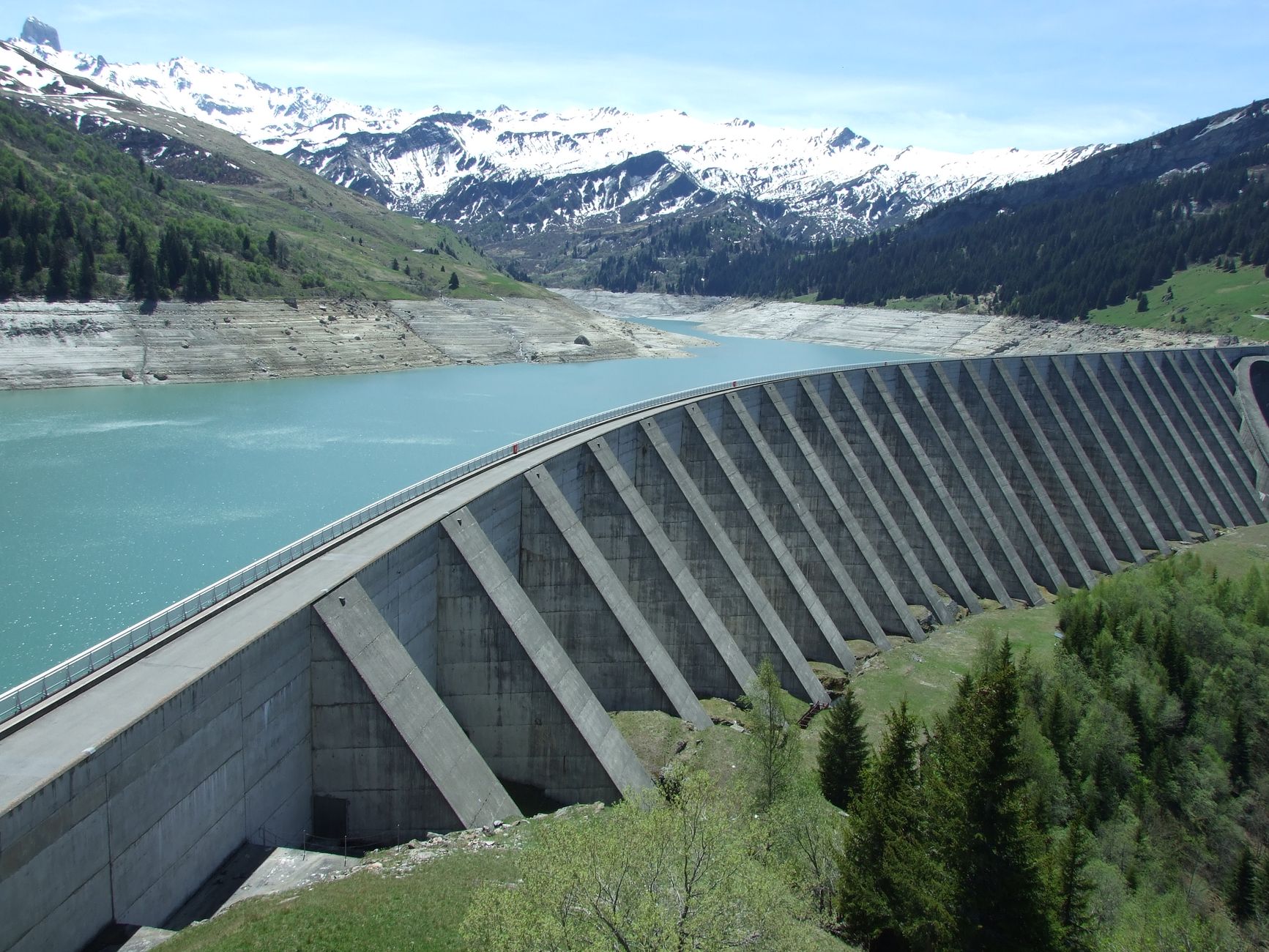
Himalayan hydropower expansion demands urgent risk rethink, expert warns
The race to tap the Himalayan region’s vast hydropower potential is running headlong into one of the world’s most unstable geological environments — and the deadly floods that tore through Nepal and Tibet earlier this year are forcing a hard conversation about how that development gets done.
Dr Arun Bhakta Shrestha, a leading authority on climate risk and environmental management in the Himalayas, says the tragedy shouldn’t just be mourned. It should be studied. “Every disaster is, in a sense, an opportunity to learn and to build back in a smarter way,” he told Access Asia. “The question is whether governments and developers are actually willing to do that.”
A mountain range under pressure
The Himalayas sit atop roughly 600 billion tonnes of ice, spread across more than 15,000 glaciers. That ice is melting faster than at almost any point in recorded history. As it does, it fills high-altitude lakes to dangerous levels — lakes that can burst without warning, sending walls of water and debris crashing down river valleys at speeds exceeding 30 kilometres per hour.
These events, known as glacial lake outburst floods, or GLOFs, are notoriously hard to predict. Shrestha explains that glacier movements happen deep within ice masses, where monitoring equipment is difficult or impossible to place. Even the most sophisticated satellite imaging can miss the internal fractures that precede a catastrophic release. So by the time anyone sees something alarming, it’s often already too late.
Hydropower’s uncomfortable position
And yet, the investment keeps coming. Nepal alone has identified hydropower capacity of around 83,000 megawatts, and the country is banking on energy exports to India and Bangladesh to drive economic growth. China has its own ambitious programme along rivers fed by Tibetan glaciers. These aren’t small projects. Some dams are being built in valleys that now sit directly in the path of known GLOF corridors.
That’s not to say hydropower is wrong for the region. But Shrestha is clear that risk management has to be baked in from the planning stage — not bolted on after the concrete is poured.
The consequences of getting it wrong are severe. Infrastructure destroyed. Communities displaced. And the trust of local populations, many of whom already have complicated relationships with large-scale development, further eroded.
What better practice looks like
Shrestha points to a handful of early-warning systems installed in parts of Nepal as proof that it can be done differently. Sensor networks at glacial lakes can give downstream communities 20 to 30 minutes of warning — enough time to evacuate, if the systems are properly maintained and communities know what to do.
The problem is that these systems are expensive, politically unglamorous, and require long-term upkeep. They don’t cut ribbons the way a new dam does.
A regional official familiar with cross-border water management in South Asia put it bluntly: “We have the technical knowledge. What we lack is the political commitment to apply it consistently.”
Shrestha believes multinational coordination — between Nepal, India, China, and Bhutan in particular — is the only way to manage a mountain system that doesn’t respect borders. Whether last year’s disasters have created enough political will to make that happen remains, for now, an open question.